Class 9 Books 2026–27 have been developed in accordance with NEP 2020, NCF-SE 2023 and the latest CBSE 2026–27 Curriculum to promote conceptual learning, critical thinking and real-world application. The revised collection includes newly designed textbooks such as Mathematics (Ganita Manjari), Science (Exploration), Social Science (Understanding Society: India and Beyond – Part I), English (Kaveri), Hindi (Ganga), Sanskrit (Sharada), Arts (Madhurima), Physical Education and Well-being (Khel Praveen), Urdu (Jamuna) and Skill Education (Kaushal Vikas), creating a more engaging, activity-based and learner-centred classroom experience.
On this page, you’ll find the complete subject-wise book list, book information, chapter lists and guidance on accessing the official PDFs. You can also explore chapter-wise solutions, notes, important questions, competency-based resources and other study materials to strengthen conceptual understanding and prepare confidently for school examinations.
NCERT Released Class 9 Books pdf in 2026–27
1. What’s New in Books
2. Mathematics (Ganita Manjari)
3. Science (Exploration)
4. Social Science Understanding Society: India and Beyond (Part 1)
5. English (Kaveri)
6. Hindi (Ganga)
7. Sanskrit (Sharada)
8. Arts (Madhurima)
9. Physical Education and Well Being (Khel Praveen)
10. Skill Education (Kaushal Vikas)
11. How Solution Bolo Helps You Throughout Class 9
12. Simple and Effective Study Tips
What’s New in Class 9 Books 2026–27?
The latest Class 9 books have been redesigned to make learning more meaningful, practical and student-centred. Here are some of the key updates introduced in the 2026–27 edition:
• New integrated textbooks have replaced several earlier subject books with learner-friendly titles like Exploration, Ganita Manjari, Kaveri and Ganga.
• NEP 2020 and NCF-SE 2023 recommendations have been incorporated to encourage conceptual understanding instead of rote learning.
• Activity-based learning has been expanded through projects, discussions, observations and hands-on classroom experiences.
• Real-life applications and competency-based questions help students connect classroom concepts with everyday situations.
• Interdisciplinary learning encourages students to link ideas across different subjects for a deeper understanding.
• Improved visual presentation with engaging illustrations, examples and student-friendly layouts makes learning more interactive.
| Official PDF: You can download the latest PDF (2026–27) from the official NCERT website. |
About the Book
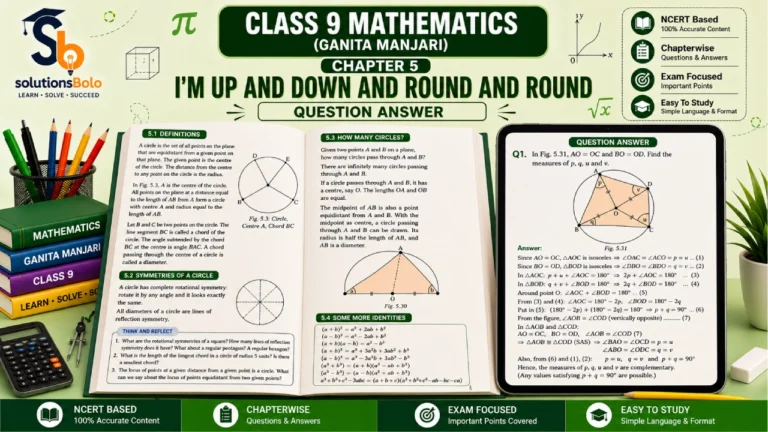
Mathematics (Ganita Manjari) helps students move from basic mathematical ideas to more structured and logical thinking. Instead of focusing only on formulas, the book encourages learners to understand concepts through activities, visual representations, real-life situations and step-by-step reasoning. It also introduces higher-order thinking questions, exploratory tasks and practical problem-solving to strengthen analytical skills.
Contents
Chapter 1: Orienting Yourself – The Use of Coordinates
Chapter 2: Introduction to Linear Polynomials
Chapter 3: The World of Numbers
Chapter 4: Exploring Algebraic Identities
Chapter 5: I’m Up and Down and Round and Round
Chapter 6: Measuring Space – Perimeter and Area
Chapter 7: The Mathematics of Maybe – Introduction to Probability
Chapter 8: Predicting What Comes Next – Exploring Sequences and Progressions
About the Book
Science (Exploration) introduces students to scientific inquiry through observation, experiments and real-life applications. The book encourages conceptual understanding instead of rote learning. Activity-based lessons, illustrations and competency-focused exercises help students develop analytical thinking and scientific reasoning while preparing them for school assessments and future science learning.
Contents
Chapter 1: Exploration – Entering the World of Secondary Science
Chapter 2: Cell – The Building Block of Life
Chapter 3: Tissues in Action
Chapter 4: Describing Motion Around Us
Chapter 5: Exploring Mixtures and their Separation
Chapter 6: How Forces Affect Motion
Chapter 7: Work, Energy and Simple Machines
Chapter 8: Journey Inside the Atom
Chapter 9: Atomic Foundations of Matter
Chapter 10: Sound Waves – Characteristics and Applications
Chapter 11: Reproduction – How Life Continues
Chapter 12: Patterns in Life – Diversity and Classification
Chapter 13: Earth as a System – Energy, Matter and Life
About the Book
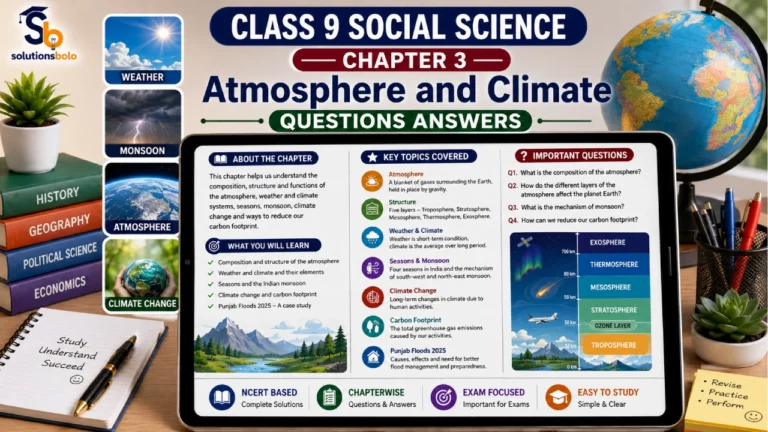
Social Science (Understanding Society: India and Beyond – Part I) presents History, Geography, Political Science and Economics as connected disciplines, helping students understand society from multiple perspectives. Through maps, case studies, activities, discussions and real-life examples, the book encourages observation, inquiry and critical thinking instead of rote learning. This book develops civic awareness, geographical understanding, historical thinking and economic literacy while enabling learners to connect classroom concepts with contemporary issues and everyday life.
Contents
Chapter 1: Understanding Social Science
Chapter 2: Shaping of the Earth’s Surface
Chapter 3: Atmosphere and Climate
Chapter 4: Early Humans and Beginning of Civilisation
Chapter 5: State and Society up to 1000 CE
Chapter 6: Democracy
Chapter 7: Elections
Chapter 8: Building Blocks in Economics: The Problem of Choice
Chapter 9: The Price Puzzle – What Drives the Market
About the Book
English (Kaveri) brings together engaging stories, poems and a play that help students strengthen their reading, writing, grammar and communication skills. The book encourages observation, critical thinking and creative expression through activity-based learning and meaningful literary texts. It also connects language learning with real-life situations, making English more enjoyable, practical and learner-friendly.
Contents
Chapter 1: How I Taught My Grandmother to Read
Chapter 2: The Pot Maker
Chapter 3: Winds of Change
Chapter 4: Vitamin M
Chapter 5: The World of Limitless Possibilities
Chapter 6: Twin Melodies
Chapter 7: Carrier of Words
Chapter 8: Follow That Dream
About the Book
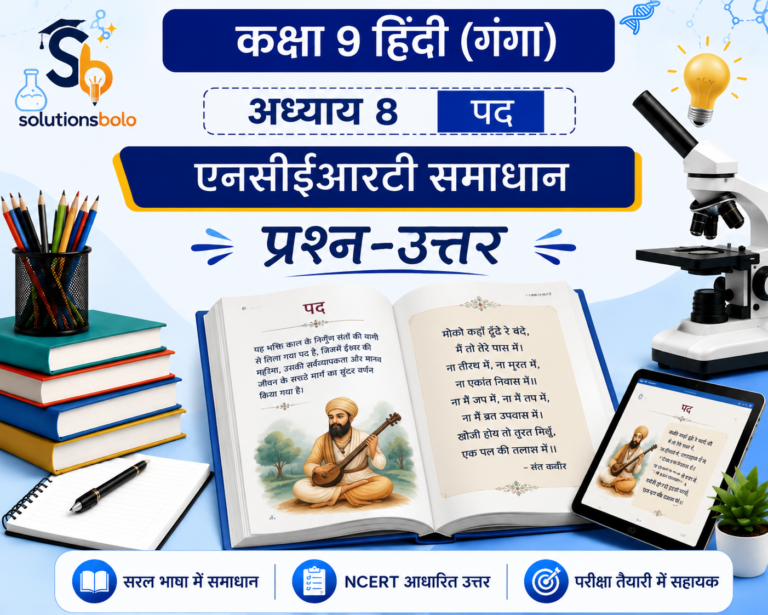
Hindi (Ganga) presents Hindi as a language of ideas, emotions and meaningful expression. Through stories, poems, plays and reflective writings, students explore diverse literary styles while strengthening their reading, writing and comprehension skills. The book also encourages independent thinking, social awareness and confident self-expression. Interactive activities, discussions and language exercises make learning engaging while deepening students’ appreciation of Hindi literature and India’s rich cultural heritage.
Contents
Chapter 1: दो बैलों की कथा
Chapter 2: क्या लिखूँ?
Chapter 3: संवादहीन
Chapter 4: ऐसी भी बातें होती हैं
Chapter 5: आख़िरी चट्टान तक
Chapter 6: रीढ़ की हड्डी
Chapter 7: मैं और मेरा देश
Chapter 8: पद
Chapter 9: राम-लक्ष्मण-परशुराम संवाद
Chapter 10: भारति, जय, विजय करे!
Chapter 11: झाँसी की रानी
Chapter 12: घर की याद
About the Book
Sanskrit (Sharada) presents Sanskrit in a simple, meaningful and engaging way, helping students connect the language with everyday life, values and India’s rich knowledge traditions. Through inspiring lessons, thoughtful verses and activity-based exercises, learners gradually strengthen their reading, pronunciation, vocabulary and grammar skills. The book also promotes clear thinking, ethical values and curiosity while introducing both classical wisdom and contemporary themes. Its learner-friendly approach makes Sanskrit enjoyable, relevant and easier to understand.
Contents
Chapter 1: सत्यं शिवं सुन्दरं संस्कृतम्
Chapter 2: सुखस्य मूलं धर्मः धर्मस्य मूलम् अर्थः
Chapter 3: आत्मवत्सर्वभूतेषु यः पश्यति सः पण्डितः
Chapter 4: न खलु वयस्तेजसो हेतुः
Chapter 5: एषा सा कृतकबुद्धिः मानवबुद्धेः सहकारी
Chapter 6: मनःपूतं समाचरेत्
Chapter 7: उपायं चिन्तयेत् प्राज्ञस्तथापायं च चिन्तयेत्
Chapter 8: अन्नाद् आनन्दं प्रति
Chapter 9: कृतं प्रतिकृतं भूयादेष धर्मः सनातनः
Chapter 10: णमो अरिहन्ताणम्
Chapter 11: वर्णोच्चारण-शिक्षा २
Chapter 12: अन्वयः
Chapter 13: समासः
Chapter 14: वाच्यम्
Chapter 15: शब्दरूपाणि
Chapter 16: धातुरूपाणि
About the Book
Arts (Madhurima) opens the door to the creative world of Visual Arts, Music, Dance and Theatre through hands-on activities and artistic exploration. It encourages observation, imagination, teamwork and self-expression while helping students appreciate India’s rich artistic and cultural heritage. Practical projects, creative exercises and reflective activities build confidence, strengthen artistic skills and show how art connects with everyday life. By combining traditional art forms with contemporary ideas, Madhurima inspires learners to explore, create and express themselves with curiosity and confidence.
Contents
HISTORY OF ARTS
Chapter 1: Introduction to the History of Arts
THEATRE
Chapter 2: The Stage Is Yours
Chapter 3: Symbols and Metaphors on Stage
Chapter 4: Creativity in Light and Sound
Chapter 5: From Vision to Performance: Direction and Acting
MUSIC
Chapter 6: Music and Us
Chapter 7: The Science of Music
Chapter 8: Rāga and Tāla
Chapter 9: Music Travels Around the World
DANCE
Chapter 10: Components of Dance
Chapter 11: Dance as Visual Storytelling
Chapter 12: Cultural Connections Through Dance
Chapter 13: Dance Choreography
VISUAL ARTS
Chapter 14: Exploring the Fundamentals of Visual Arts
Chapter 15: Mediums and Techniques in Visual Art
Chapter 16: Visual Composition
Chapter 17: Branches of Visual Arts
Annexure: List of Padma Awardees for Art and Culture – 2026
About the Book
Physical Education and Well Being (Khel Praveen) encourages students to build healthy habits, physical fitness and overall well-being through activity-based learning. The book combines sports, yoga, health education and practical activities to develop strength, teamwork, discipline and confidence. It also introduces Olympic values, indigenous games, adventure sports and fitness science while promoting an active lifestyle. With simple explanations and hands-on learning, learners understand how physical education contributes to lifelong health, personal growth and overall well-being.
Contents
UNIT 1 – Evolution of Physical Education and Well-being
Chapter 1: Physical Education and Well-being
Chapter 2: History and Culture of Physical Education in India
Chapter 3: Careers in Physical Education
Chapter 4: Fitness and its Components
UNIT 2 – Science and Sports
Chapter 5: Understanding Our Body
Chapter 6: Cardiorespiratory System
Chapter 7: Growth, Development and Maturation Chapter 8 First Aid
UNIT 3 – Olympism
Chapter 9: Olympic Values
Chapter 10: The Ancient Olympic Games
Chapter 11: The Modern Olympic Games
UNIT 4 – Sports for All
Chapter 12: Sports and Inclusivity
Chapter 13: Sports and Disability
Chapter 14: Disability Etiquettes: Respecting Everyone with Dignity
Chapter 15: Young Athlete
Chapter 16: Women in Sports
Chapter 17: Age is Just a Number
UNIT 5 – Sports
Chapter 18: Indigenous Martial Arts and Sport
Chapter 19: Combat Sports
Chapter 20: Outdoor Sports
UNIT 6 – Yoga for Holistic Health and Personal Excellence
Chapter 21: Samagra Svāsthya (Yoga for Holistic Health)
Chapter 22: Yogamaya Jīvana (Lifestyle for Holistic Health)
Chapter 23: Yoga for Personal Excellence
About the Book
Skill Education (Kaushal Vikas) helps students develop practical skills through real-world learning and hands-on activities. The book is organised around three areas—Work with Life Forms, Work with Machines and Materials and Work in Human Services—giving learners the flexibility to explore different vocations. Along with technical knowledge, it builds planning, problem-solving, teamwork and workplace competencies. Projects, case studies, safety guidelines and portfolio activities encourage students to apply their learning in practical situations while preparing them for future careers and everyday life.
Contents
Unit I – Work with Life Forms
Chapter 1: Introduction to Agricultural Practices (Mandatory)
Chapter 2: Rooftop Gardening (Select One)
Chapter 3: Precision Farming (Select One)
Chapter 4: Additional Vocations
Unit II – Work with Machines and Materials
Chapter 5: Shaping Materials (Mandatory)
Chapter 6: Construction (Select One)
Chapter 7: Apparel (Select One)
Chapter 8: Additional Vocations
Unit III – Work in Human Services
Chapter 9: Personal and Lifestyle Services (Mandatory)
Chapter 10: Healthcare (Select One)
Chapter 11: Tourism (Select One)
Chapter 12: Additional Vocations
[Note: The first chapter of each Unit (1, 5 and 9) is Mandatory. After this, schools can select the relevant Vocations according to their requirements.]
How Solution Bolo Helps You Throughout Class 9
Class 9 is an important stage because the difficulty level increases compared to Class 8. The new books focus on conceptual understanding, activities and competency-based learning, so simply memorising answers is no longer enough.
Solution Bolo is designed to make this journey easier by providing clear, reliable and exam-focused study resources that help you understand every chapter with confidence.
• Read the NCERT textbook first – Start every chapter by reading the textbook carefully. Don’t rush to memorise answers.
• Target the Chapter Keywords – There are many words in various chapters whose meanings you might not understand; that is why it is important to grasp the material in depth. Use these words in exams also.
• Focus on Explanation more – Practise both concise answers for quick revision and detailed answers for better conceptual understanding and school examinations.
• Competency-Based Questions – Prepare with application-based, case-based and critical-thinking questions aligned with the latest classroom assessment pattern.
• Prepare Chapter-wise Notes – Revise important concepts, key points and definitions quickly before tests and examinations.
• Latest Book & Curriculum Updates – Stay updated with newly introduced textbooks, revised chapters and important academic changes throughout the session.
• Smart Revision Support – Prepare short notes, highlight important concepts and revise efficiently in less time.
• Your Learning Companion – From the first chapter to the final examination, we are always here to guide you. Learn consistently, strengthen concepts and study with greater confidence throughout the academic year.
Simple and Effective Study Tips:
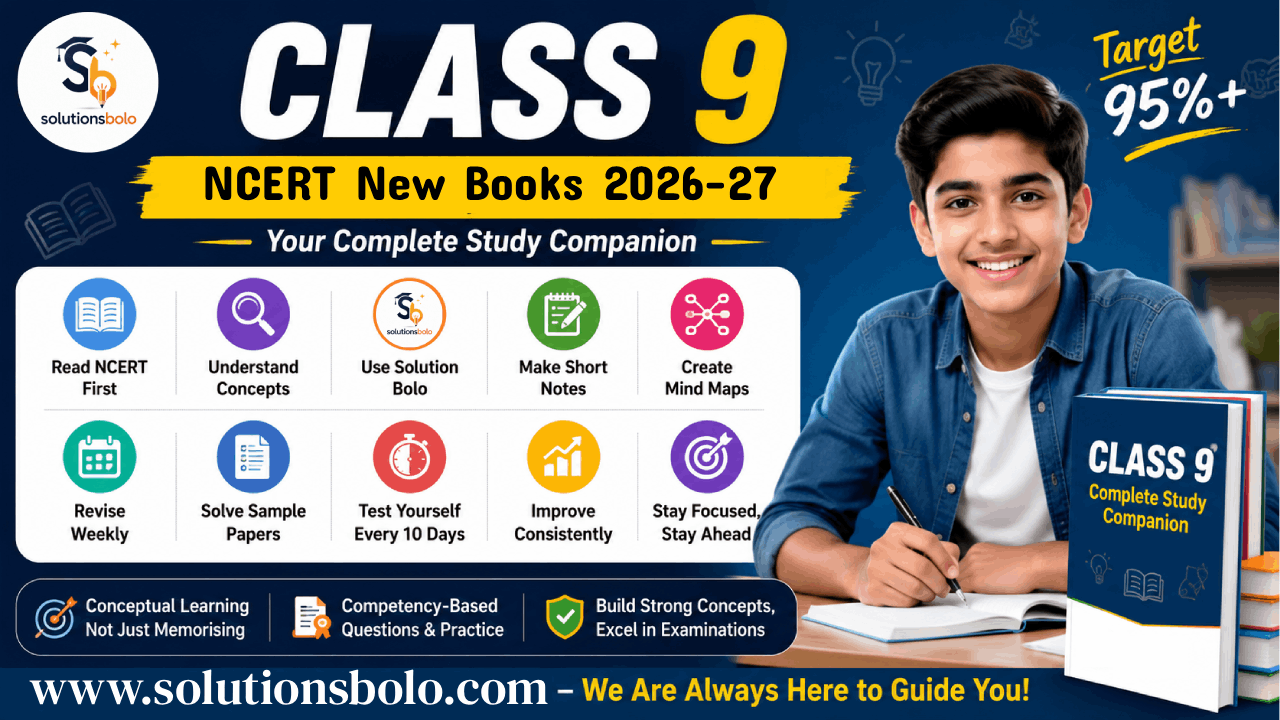
1. Set Your Goal to Score 95%+ – Having a clear goal keeps you motivated and helps you stay focused throughout the academic year.
2. Make Study Routine – A planned study routine and regular revision will help you understand every chapter with confidence.
3. Read the NCERT textbook first – Start every chapter by reading the textbook carefully. Don’t rush to memorise answers.
4. Make short notes while studying – Write important formulas, definitions, dates, keywords and concepts in your own words. These quick notes will save valuable time during revision.
5. Use Solution Bolo after reading the chapter – Once you’ve finished the textbook, visit Solution Bolo to understand difficult concepts, strengthen your preparation.
6. Create simple Mind Maps – Prepare one-page mind maps for every chapter using keywords, arrows and diagrams.
7. Highlight only important points – Avoid highlighting entire paragraphs. Use a highlighter only for formulas, definitions, key facts, important terms.
8. Revise every week and 1 hour/day – Reserve one day every week to revise everything you studied during the previous six days. Also 1 hour per day, its compulsory.
9. Test yourself every 10 days interval – Take a one-hour self-test at home using previously studied chapters. Check your mistakes honestly and revise weak topics before starting new lessons.
10. Stay consistent throughout the year – Success in Class 9 comes from regular study, not last-minute preparation.
| Class 9 Success Formula: • Read NCERT → Use Solution Bolo → Make Notes → Create Mind Maps → Revise Weekly → Solve Sample Papers → Test Yourself Every 10 days interval → Improve • Following this simple routine throughout the academic session will help you build strong concepts, stay organised and perform confidently in every school examination. |
Frequently Asked Questions (FAQs)
1. Is the Class 9th syllabus changed in 2026–27?
Answer: Yes, the CBSE Class 9 syllabus for the 2026–27 session has been completely updated with brand-new NCERT textbooks developed under NEP 2020 and NCF-SE 2023. The revised syllabus focuses on competency-based, experiential and activity-driven learning rather than traditional rote memorisation.
2. What are the names of the new NCERT Class 9 textbooks for 2026–27?
Answer: The new NCERT collection introduces updated subject titles including Exploration for Science, Ganita Manjari for Mathematics, Kaveri for English, Ganga for Hindi, Sharada for Sanskrit, Madhurima for Arts and Khel Praveen for Physical Education and Well-Being.
3. What is the name of the new Class 9 NCERT Science book?
Answer: The latest NCERT Science textbook for Class 9 is titled Exploration. It introduces core scientific concepts through practical observations, hands-on experiments, real-life investigations and competency-focused application exercises.
4. Which new Mathematics book is prescribed for Class 9?
Answer: The new Class 9 Mathematics textbook is named Ganita Manjari. It focuses on conceptual clarity, logical reasoning, visual understanding and real-world problem-solving skills aligned with the latest NCF-SE framework.
5. What is the new NCERT English textbook for Class 9?
Answer: The new English textbook prescribed for Class 9 is Kaveri. It includes engaging stories, poems, plays and interactive language activities designed to enhance communication skills, critical thinking and literary appreciation.
6. Are the new Class 9 NCERT books available in both English and Hindi mediums?
Answer: Yes, NCERT publishes the newly revised Class 9 textbooks in multiple languages, including English and Hindi editions, allowing students from different learning mediums to study the updated curriculum seamlessly.
7. Are chapter-wise solutions available for the new NCERT Class 9 books?
Answer: Yes, updated chapter-wise NCERT solutions, simplified explanations, revision notes and competency-based questions are regularly made available on trusted educational portals like solutionsbolo.com to support student preparation.
8. Are the new Class 9 NCERT books fully based on NEP 2020?
Answer: Yes, all the newly released Class 9 textbooks strictly follow the recommendations of NEP 2020 and NCF-SE 2023. They promote interdisciplinary education, analytical thinking, practical activities and multidisciplinary learning across all subjects.
9. Does the new CBSE Class 9 syllabus include competency-based questions?
Answer: Yes, school assessments and annual examinations based on the new syllabus will feature competency-based, application-oriented and analytical questions. These evaluate a student’s deep conceptual understanding rather than simple memorisation.
10. Has NCERT released the 2026–27 books for Class 9?
Answer: Yes, NCERT has officially released the new 2026–27 edition textbooks for Class 9 across major subjects. Students and teachers can access these updated books and chapter-wise study materials directly from the official NCERT portal or trusted platforms like solutionsbolo.
11. Is the Class 9 Social Science syllabus updated for the 2026–27 session?
Answer: Yes, the Class 9 Social Science curriculum has been thoroughly revised with new NCERT textbooks that integrate updated historical perspectives, modern geographical studies, practical civic understanding and economics aligned with NCF-SE 2023.
12. What are the passing marks for CBSE Class 9 examinations?
Answer: Students must secure a minimum of 33% marks in each subject, including both internal assessments and the annual written examination, to successfully pass and get promoted to Class 10.
13. How are internal assessments calculated in CBSE Class 9 under NEP 2020?
Answer: Internal assessments carry 20 marks and are calculated using periodic tests, portfolio submissions, subject-enrichment activities, practical projects and continuous classroom participation throughout the academic year.
14. What type of questions will appear in the Class 9 annual exams?
Answer: The annual exam question paper includes a balanced mix of Multiple Choice Questions (MCQs), Assertion-Reasoning questions, Short Answer questions, Long Answer questions and Case-Based or Source-Based competency questions.
15. Are sample papers and question banks available for the new Class 9 NCERT books?
Answer: Yes, updated sample papers, competency-based practice questions and chapter-wise question banks aligned with the revised 2026–27 NCERT pattern are available on official education portals and study platforms like solutions bolo website.
16. Why did NCERT rename the Class 9 textbooks for 2026–27?
Answer: NCERT renamed and redesigned the Class 9 textbooks to reflect a fresh, modern pedagogical approach under NEP 2020, replacing traditional rote-learning content with interactive, story-based and application-oriented educational material.
17. How can students prepare effectively for Class 9 competency-based questions?
Answer: Students should focus on understanding core concepts, reading NCERT textbook examples thoroughly, solving real-life application problems and practicing case-study questions rather than just memorising definitions.
18. Is attendance compulsory for appearing in Class 9 CBSE annual exams?
Answer: Yes, CBSE guidelines require students to maintain a minimum of 75% attendance during the academic session to be eligible to appear for the Class 9 annual school examinations.
19. What are the main benefits of NCF-SE 2023 in the new Class 9 curriculum?
Answer: NCF-SE 2023 reduces textbook clutter, promotes multidisciplinary learning, encourages hands-on activities, integrates Indian knowledge systems and focuses on overall skill development alongside academic excellence.
20. Can students use old NCERT Class 9 books for the 2026–27 academic year?
Answer: No, using old NCERT books is not recommended because the new 2026–27 curriculum features completely revised chapter titles, updated content, modern activity modules and new assessment guidelines under NEP 2020.
| Official PDF: You can download the latest PDF (2026–27) from the official NCERT website. |