Class 9 Science Exploration Chapter 3 “Tissues in Action” explains how groups of specialised cells work together to perform specific functions in plants and animals. The chapter discusses plant tissues such as meristematic, parenchyma, collenchyma, sclerenchyma, xylem and phloem, along with animal tissues including epithelial, connective, muscular and nervous tissues. It also explores the human musculoskeletal system, bones, muscles, tendons, ligaments, cartilage and different types of joints that enable movement and support. Through activities, diagrams and real-life examples, students learn how tissues contribute to growth, transport, protection, coordination and movement. These solutions help students understand key biological concepts through clear explanations, labelled diagrams and competency-based questions as per the latest CBSE syllabus (2026–27).
• इस पूरे अध्याय को हिंदी में पढ़ें (हिंदी मीडियम के छात्रों के लिए)
Quick Links:
1. Chapter Introduction:
2. Important Points of the Chapter:
3. Common Mistakes Students Make:
4. Important Keywords and Key Points for MCQs:
5. Intext Questions and Answers:
6. Exercise Questions and Answers:
7. Scientists Mentioned in the Chapter:
8. Thinking-Based / Competency-Based Questions:
9. Very Short Answer Type Questions:
10. Short Answer Type Questions:
11. FAQs of the Chapter:
1. Chapter Introduction:
Living organisms perform many life processes efficiently because their bodies are made up of specialised cells and tissues. A tissue is a group of cells that work together to perform a specific function. In multicellular organisms, tissues help in the division of labour, making different activities more organised and effective.
This chapter introduces the various types of plant and animal tissues and explains how their structures are related to their functions. In plants, tissues such as meristematic, parenchyma, collenchyma, sclerenchyma, xylem and phloem help in growth, support, storage and transport. In animals, epithelial, connective, muscular and nervous tissues perform protection, support, movement, coordination and communication. The chapter also explores bones, muscles, joints and their role in body movement and support.
2. Important Points of the Chapter:
• A tissue is a group of similar cells working together to perform a specific function.
• Plant tissues are broadly classified into meristematic tissues and permanent tissues.
• Meristematic tissues contain actively dividing cells responsible for plant growth.
• Apical meristem increases the length of roots and shoots.
• Intercalary meristem helps in the growth of internodes and leaf bases.
• Lateral meristem (cambium) increases the girth (thickness) of stems and roots.
• Permanent tissues are formed when meristematic cells differentiate and lose the ability to divide.
• Parenchyma consists of living cells that store food, water and may perform photosynthesis.
• Collenchyma provides support and flexibility to young plant parts.
• Sclerenchyma contains thick, lignified walls and provides strength and rigidity.
• Xylem transports water and minerals from roots to different parts of the plant.
• Phloem transports food prepared in leaves to all parts of the plant.
• The epidermis forms the protective outer covering of plant organs.
• Stomata are small pores in the epidermis that help in gaseous exchange and transpiration.
• Animal tissues are classified into epithelial, connective, muscular and nervous tissues.
• Epithelial tissue covers body surfaces and protects underlying tissues.
• Connective tissue supports, binds and connects different body parts.
• Blood is a connective tissue that transports oxygen, nutrients and wastes.
• Bone provides support, protection and attachment for muscles.
• Cartilage is flexible connective tissue that reduces friction at joints.
• Tendons connect muscles to bones and help in movement.
• Ligaments connect bones to bones and stabilise joints.
• Muscular tissue enables movement through contraction and relaxation.
• Skeletal muscles are voluntary muscles attached to bones.
• Smooth muscles are involuntary muscles found in internal organs.
• Cardiac muscles are specialised involuntary muscles found only in the heart.
• Nervous tissue receives, processes and transmits information throughout the body.
• The musculoskeletal system consists of bones, muscles, joints, tendons and ligaments.
• Ball-and-socket joints allow movement in many directions, such as in the shoulder and hip.
• Hinge joints allow movement in one plane, such as in the elbow and knee.
• Pivot joints allow rotational movement, such as in the neck.
• Annual rings in tree stems help estimate the age of a tree.
3. Common Mistakes Students Make in the Chapter:
• Meristematic tissue and permanent tissue are often confused. Meristematic cells actively divide and help in growth, whereas permanent cells are differentiated and usually do not divide.
• Parenchyma, collenchyma and sclerenchyma have different functions. Parenchyma stores food and performs photosynthesis, collenchyma provides flexibility and support, while sclerenchyma provides strength and rigidity due to thick lignified walls.
• Xylem transports water and minerals from roots to other parts of the plant, whereas phloem transports food prepared in leaves throughout the plant. Students often confuse xylem and phloem.
• Tendons and ligaments are commonly mixed up. Tendons connect muscles to bones, while ligaments connect bones to bones and help stabilise joints.
• Cartilage is not the same as bone. Cartilage is softer, more flexible and reduces friction at joints, whereas bones are hard and provide support and protection.
• Collenchyma provides flexibility to young stems and leaf stalks. Students sometimes incorrectly assume that sclerenchyma also provides flexibility, but sclerenchyma makes plant parts hard and rigid.
• Epithelial tissue covers and protects body surfaces, while connective tissue supports, binds and connects different tissues and organs. Their functions are often confused in MCQs.
• Hinge joints, pivot joints and ball-and-socket joints allow different types of movement. Students frequently interchange their examples and functions.
• Annual rings indicate the age of a tree and result from secondary growth. Students often mistakenly relate them to primary growth.
• Lateral meristem (cambium) increases the girth of stems and roots, whereas apical meristem increases length. This distinction is frequently tested in examinations.
• Cardiac muscles do not tire easily because they have a rich blood supply and numerous mitochondria. They are different from both skeletal and smooth muscles.
• A tissue may perform more than one function. For example, parenchyma can store food, store water and perform photosynthesis. Students should avoid assuming that every tissue has only one function.
4. Intext Questions and Answers:
1. How is the study of cells and tissues significant for understanding the life processes and human welfare?
Answer: The study of cells and tissues helps us understand how living organisms grow, function and survive. It also supports medical research, disease treatment, tissue culture, crop improvement and other developments that contribute to human welfare.
Explanation: Cells are the basic units of life and tissues are groups of similar cells performing specific functions. Studying them helps us understand growth, development, transport, movement, coordination and other life processes in plants and animals. This knowledge has practical applications in medicine, biotechnology, tissue culture, crop improvement and disease management. Therefore, the study of cells and tissues not only explains how organisms function but also contributes greatly to human welfare and scientific progress.
2. How are tissues in plants and animals different and why?
Answer: Plant tissues mainly provide support, transport and growth because plants are fixed in one place. Animal tissues support movement, coordination and digestion because animals are generally mobile and perform complex activities.
Explanation: Plant and animal tissues differ because plants and animals have different lifestyles and needs. Plants are generally fixed in one place, so they require tissues for support, growth, photosynthesis and transport of water and food. Animals move from place to place and need tissues for movement, coordination, sensation and digestion. Plant cells have rigid cell walls, whereas animal cells are flexible. These structural and functional differences result in different types of tissues in plants and animals.
3. How is the division of labour at various levels of organisation in multicellular organisms correlated with their structure and function?
Answer: In multicellular organisms, cells form tissues, tissues form organs and organs form organ systems. Each level has specialised structures that perform specific functions, making life processes more efficient through division of labour.
Explanation: Multicellular organisms show a hierarchy of organisation where similar cells form tissues, tissues form organs, organs form organ systems and organ systems form the organism. Each level is structurally specialised for a particular function. For example, muscle tissue enables movement while nervous tissue controls coordination. This division of labour increases efficiency, allows complex activities to occur smoothly and ensures that different life processes are carried out effectively within the organism.
4. In his experiment on phloem cells of carrot, F. C. Steward used different combinations of nutrients and other factors and obtained the following results.
Table 3.6: Effect of light, air and nutrient medium on growth of the cultured plant cells
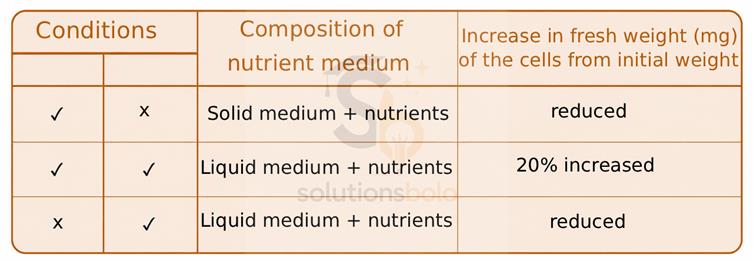
Based upon Table 3.6, think about these questions:
(a) What do you conclude about the characteristics of phloem cells of carrot?
(b) In which of the three combinations would you obtain the highest and lowest biomass? What could be the possible reason(s) for this observation?
(c) Will you get the same results if you culture animal cells instead of carrot cells?
(d) Think and mention any two commercial applications of the study above.
Answer: (a) The experiment shows that mature phloem cells of carrot can regain the ability to divide, form unspecialised cells and develop into a complete plant. Thus, they possess totipotency, the ability to regenerate an entire plant.
(b) The highest biomass would be obtained with light, air and liquid medium with nutrients. The lowest biomass would occur in the conditions where growth was reduced. Adequate oxygen, nutrients and suitable conditions promote maximum cell growth.
(c) No, the same results are unlikely. Most animal cells do not possess totipotency like plant cells. They cannot usually regenerate an entire organism from a single mature cell under normal culture conditions.
(d) Two commercial applications are:
1. Mass production of disease-free plants through tissue culture.
2. Rapid multiplication of improved crop varieties with desirable traits for agriculture and horticulture.
Explanation: (a) F. C. Steward’s experiment demonstrated that mature phloem cells of carrot are totipotent. These cells can first dedifferentiate, regain the ability to divide and form an undifferentiated mass of cells. Under suitable conditions with nutrients and growth hormones, they can re-differentiate into roots, shoots and eventually a complete plant. This proves that some mature plant cells retain the genetic information and potential needed to regenerate an entire organism.
(b) The highest biomass is obtained when both light and air are present along with a nutrient-rich liquid medium, where the fresh weight increased by 20%. The lowest biomass is obtained in the combinations where growth was reduced. Proper aeration, nutrients and suitable environmental conditions support active cell division and metabolism. Lack of light or air restricts cellular activities, reducing growth and biomass production in the cultured cells.
(c) No, animal cells generally do not show the same degree of totipotency as plant cells. While some animal stem cells can divide and form different tissues, most mature animal cells cannot develop into a complete organism. Plant cells have a remarkable ability to dedifferentiate and regenerate whole plants under suitable conditions. Therefore, culturing mature animal cells would not normally produce a complete animal as seen in the carrot experiment.
(d) The study of totipotency has many commercial applications. First, tissue culture is used for the large-scale production of disease-free and genetically uniform plants. Second, improved crop varieties with desirable characteristics such as higher yield, better quality or disease resistance can be multiplied rapidly. These techniques are widely used in agriculture, horticulture, forestry and plant biotechnology to increase productivity and conserve valuable plant species.
Pause and Ponder
1. You may have noticed that fibres of coconut husk are hard and brittle, whereas the leaf stalks of coriander are soft and flexible. Find out the reason.
Answer: Coconut husk fibres contain sclerenchyma, which has thick lignified walls that make them hard and brittle. Coriander leaf stalks contain collenchyma, whose living cells provide flexibility and support, allowing bending without breaking.
Explanation: The fibres of coconut husk are mainly made of sclerenchyma tissue. These cells have thick, lignified walls and are usually dead, making them very hard, strong and brittle. In contrast, coriander leaf stalks contain collenchyma tissue, which consists of living cells with unevenly thickened walls. This tissue provides both support and flexibility, allowing the stalk to bend without breaking. Therefore, the difference in their properties is due to the different supporting tissues present in them.
2. Why do you think that a thick cuticle on the outer wall of epidermis is advantageous for a plant living in the desert but disadvantageous for a plant living underwater?
Answer: A thick cuticle reduces water loss through transpiration, helping desert plants conserve water. Underwater plants do not face water shortage, so a thick cuticle would hinder the exchange of gases and substances with water.
Explanation: Desert plants live in dry conditions where water is scarce. A thick cuticle reduces water loss through transpiration and protects the plant from dehydration. However, underwater plants are surrounded by water and do not need to conserve it. A thick cuticle would act as a barrier, making the exchange of gases and dissolved substances more difficult. Therefore, a thick cuticle is beneficial in deserts but disadvantageous for aquatic plants.
3. Once water is absorbed by plant roots, it has to travel against gravity through xylem. How do the ‘dead’ cells of the xylem work together with the living cells of leaves at the top to keep the water moving?
Answer: Dead xylem vessels form continuous tubes that carry water upward. Living leaf cells lose water through transpiration, creating a transpiration pull that draws water upward through the xylem against gravity.
Explanation: The dead cells of xylem, such as vessels and tracheids, form long hollow tubes that transport water and minerals from roots to leaves. Living cells in the leaves continuously lose water through transpiration. This creates a transpiration pull that generates suction, drawing water upward through the xylem. Thus, the dead xylem cells provide the pathway, while the living leaf cells create the force needed to move water against gravity.
4. What do you think will happen if there were no stomata in the epidermis of the stem or leaves?
Answer: Without stomata, plants could not exchange gases efficiently or perform normal transpiration. Photosynthesis and respiration would be affected, water transport would decrease and the plant’s growth and survival would be seriously hampered.
Explanation: Stomata are essential for gaseous exchange and transpiration. If stems and leaves had no stomata, carbon dioxide could not enter efficiently for photosynthesis and oxygen exchange would be restricted. Transpiration would also stop, reducing the transpiration pull needed for water transport through xylem. As a result, photosynthesis, respiration, mineral transport and overall plant growth would be severely affected, making survival difficult for the plant.
5. Look at the picture given below (Fig. 3.17). Carefully observe the various poses of classical and folk dances of India. Can you identify which joints are involved? Also, what type of movement each joint allows?
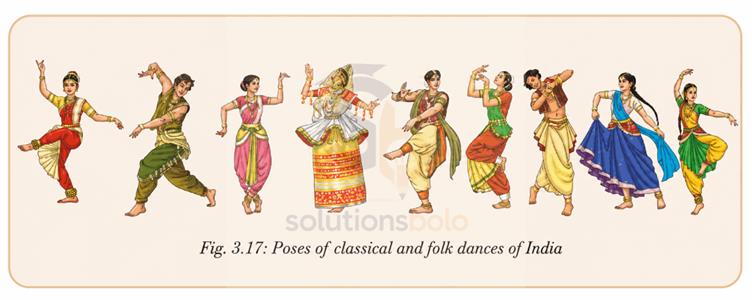
Answer: Dance poses involve the shoulder, hip, elbow, knee, neck, wrist and ankle joints. Shoulder and hip are ball-and-socket joints allowing movement in many directions, while elbow and knee are hinge joints permitting bending and straightening.
Explanation: Various dance poses use different joints of the body. The shoulder and hip joints are ball-and-socket joints that allow circular, sideways, forward and backward movements. The elbow, knee, fingers and ankles mainly contain hinge joints that permit bending and straightening. The neck has a pivot joint, enabling the head to turn from side to side. These different joints work together to provide flexibility, balance, graceful movements and a wide range of postures required in classical and folk dances.
Joints and Their Movements
| Joint | Type of Joint | Movement Allowed |
| Shoulder | Ball-and-socket | Circular, forward, backward, sideways |
| Hip | Ball-and-socket | Circular and multidirectional movement |
| Elbow | Hinge | Bending and straightening |
| Knee | Hinge | Bending and straightening |
| Neck | Pivot | Side-to-side turning |
| Wrist | Flexible joint | Up-down and side movements |
| Ankle | Hinge-like joint | Bending the foot up and down |
Exercise Questions and Answers:
1. Meristematic tissues divide repeatedly. What property of their cells allows them to do this?
(i) They have thick walls for protection.
(ii) They contain large vacuoles that store nutrients.
(iii) They have thin walls, dense cytoplasm and large prominent nucleus.
(iv) They are functionally differentiated cells
Correct Option: (iii) They have thin walls, dense cytoplasm and large prominent nucleus.
Answer: Meristematic cells divide continuously because they possess thin cell walls, dense cytoplasm and a large prominent nucleus. These features keep the cells metabolically active and capable of rapid cell division for plant growth.
Explanation: Meristematic tissues are made up of actively dividing cells. Their cells are small, have thin cell walls, dense cytoplasm and a large prominent nucleus. Vacuoles are absent or very small, allowing more space for cellular activities. These characteristics help the cells remain active and continuously undergo cell division. As a result, meristematic tissues are responsible for increasing the length, girth and regeneration of plant parts throughout the plant’s life.
2. If a plant is unable to transport food from leaves to roots which tissue is malfunctioning?
(i) Xylem
(ii) Phloem
(iii) Epidermis
(iv) Sclerenchyma
Correct Option: (ii) Phloem
Answer: Phloem transports food prepared in leaves to all parts of the plant, including roots. If food transport stops, the phloem tissue is malfunctioning because it is responsible for distributing nutrients throughout the plant.
Explanation: Phloem is the conducting tissue that transports food manufactured in the leaves to different parts of the plant. It consists mainly of living cells, including sieve tubes and companion cells. If food cannot move from leaves to roots, the phloem is not functioning properly. Without phloem transport, roots and other non-photosynthetic parts would not receive nutrients, affecting growth, storage and overall survival of the plant.
3. Why are the epithelial tissues that line an animal’s internal organs usually only one or a few cells thick?
(i) To store food efficiently.
(ii) To provide maximum strength.
(iii) To allow quick exchange of materials across them.
(iv) To reduce friction.
Correct Option: (iii) To allow quick exchange of materials across them.
Answer: Epithelial tissues are usually thin so that gases, nutrients, water and other substances can move quickly across them. This helps in efficient absorption, diffusion, secretion and exchange of materials within the body.
Explanation: Many epithelial tissues consist of only one or a few layers of cells because thin layers allow substances to pass through rapidly. In organs such as the lungs and blood vessels, quick diffusion of gases is essential for efficient functioning. Similarly, absorption and secretion require a short distance for material movement. Therefore, the thin structure of epithelial tissue is an adaptation that enables fast and efficient exchange of materials across body surfaces.
4. You can perform these two jumps (Fig. 3.21): Straight-leg jump — keep knees and ankles stiff. Normal jump — bend knees and ankles naturally. How did your ankle, knee and hip positions differ between the two jumps?
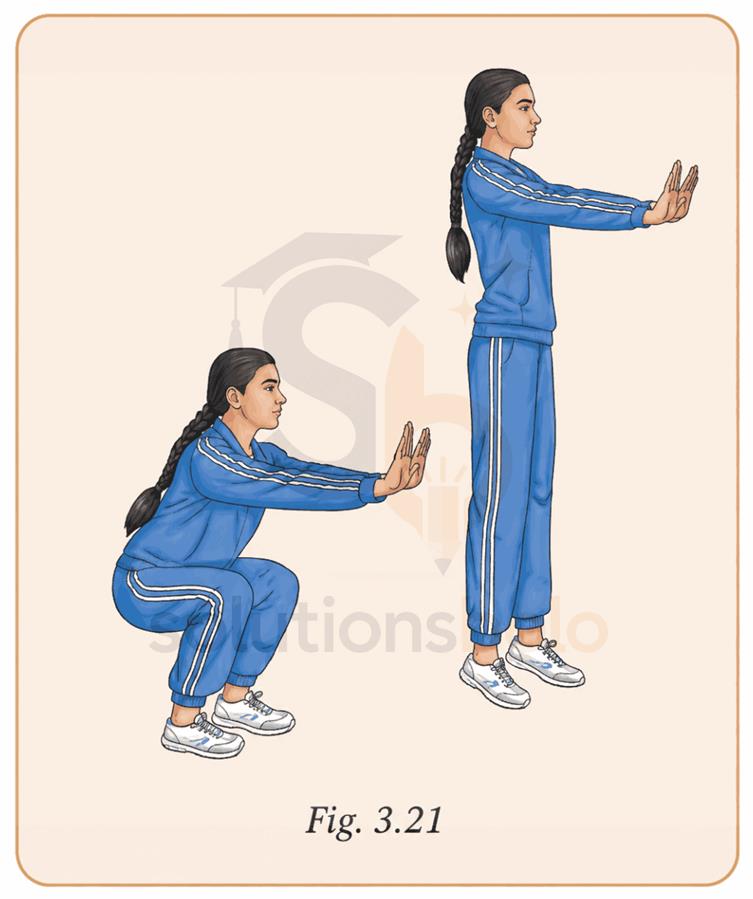
Answer: In a straight-leg jump, the knees and ankles remain stiff and mostly straight. In a normal jump, the knees and ankles bend naturally, while the hips also flex slightly, allowing smoother movement and better shock absorption.
Explanation: During a straight-leg jump, the knees and ankles stay rigid and the hips show very little bending. In contrast, a normal jump involves bending of the ankles, knees and hips before take-off and after landing. This bending helps absorb impact, maintain balance and generate greater force for jumping. The coordinated movement of these joints makes jumping more efficient and reduces stress on bones and muscles during landing.
5. Which type of joint is involved when you bend your knees and ankles? (i) Ball and socket (ii) Hinge (iii) Pivot
Correct Option: (ii) Hinge
Answer: The knee and ankle mainly function as hinge joints. These joints permit movement in one plane, allowing bending and straightening similar to the movement of a door hinge.
Explanation: A hinge joint is involved when the knees and ankles bend. Hinge joints allow movement mainly in one direction, similar to the opening and closing of a door. The knee is a classic example of a hinge joint and the ankle also performs hinge-like movements. These joints provide stability while allowing efficient bending and straightening during walking, running, jumping and other everyday activities.
6. In each of the following cases (A, B, C and D), choose the correct option as given below:
(i) Both (A) and (R) are true and (R) is the correct explanation of (A).
(ii) Both (A) and (R) are true, but (R) is not the correct explanation of (A).
(iii) (A) is true, but (R) is false.
(iv) (A) is false, but (R) is true.
A. Assertion: Epithelium is well-suited for gas exchange in the lungs.
Reason: It consists of multiple layers of tall cells that slow down diffusion.
Correct Option: (iii) (A) is true, but (R) is false.
Answer: The assertion is true because lung epithelium is thin and allows rapid gas diffusion. The reason is false because multiple layers of tall cells would slow diffusion instead of facilitating gas exchange.
Explanation: The assertion is correct because the lung lining consists of a thin layer of flat epithelial cells that permits rapid diffusion of oxygen and carbon dioxide. The reason is incorrect because multiple layers of tall cells would increase diffusion distance and reduce the efficiency of gas exchange. Therefore, the epithelium in lungs is specially adapted to be thin rather than thick, making option (iii) the correct answer.
B. Assertion: Cardiac muscle can contract continuously without fatigue.
Reason: Cardiac muscle cells have a high number of mitochondria and an abundant blood supply.
Correct Option: (i) Both (A) and (R) are true and (R) is the correct explanation of (A).
Answer: Cardiac muscles work continuously throughout life without fatigue. Their cells contain many mitochondria and receive a rich blood supply, ensuring a constant energy supply needed for uninterrupted contraction.
Explanation: Cardiac muscles contract rhythmically throughout life and do not tire easily. This is possible because cardiac muscle cells contain numerous mitochondria that produce energy efficiently and receive a continuous supply of oxygen and nutrients through abundant blood circulation. These adaptations support uninterrupted activity of the heart. Therefore, both the assertion and reason are true and the reason correctly explains the assertion.
C. Assertion: Tendons connect bone to bone and allow joint movement.
Reason: Tendons are made of tough connective tissue that transmits force from muscle to bone.
Correct Option: (iv) (A) is false, but (R) is true.
Answer: The assertion is false because tendons connect muscles to bones, not bone to bone. The reason is true because tendons are tough connective tissues that transmit force generated by muscles to bones.
Explanation: Tendons do not connect bone to bone; that function is performed by ligaments. Tendons connect muscles to bones and transmit the force generated during muscle contraction to produce movement. Since tendons are strong connective tissues, the reason statement is correct. However, the assertion incorrectly describes the function of tendons. Therefore, the correct option is (iv): the assertion is false, but the reason is true.
D. Assertion: In a hinge joint, movement occurs primarily in one plane.
Reason: The bone ends are shaped to allow sliding in all directions.
Correct Option: (iii) (A) is true, but (R) is false.
Answer: Hinge joints permit movement mainly in one direction, such as bending and straightening. The reason is false because hinge joints do not allow sliding in all directions; such movement would reduce stability.
Explanation: The assertion is true because hinge joints, such as those in the elbow and knee, allow movement mainly in one plane, like a door hinge. The reason is false because the structure of a hinge joint restricts movement to a single direction rather than permitting sliding in all directions. This limitation provides stability and controlled motion. Hence, option (iii) is the correct answer.
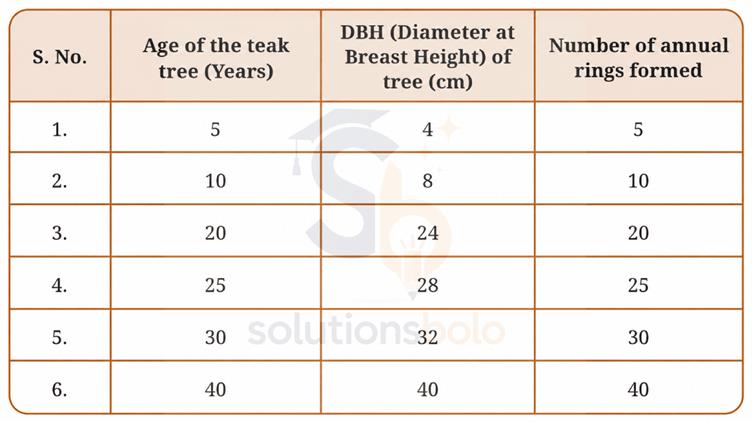
7. Plot a graph between the age of a tree (in years) on the x-axis and the diameter of the tree (in cm) along with the number of annual rings formed over time on the y-axis, using the data given in the Table 3.7.
Table 3.7: Data related to the age of a teak tree and corresponding increase in the diameter of stem and number of annual rings
(i) Analyse the graph in terms of the diameter of the stem over time and share the interpretation.
(ii) What is the relation between the diameter of the teak tree to the annual rings formed?
(iii) Which specialised tissue is responsible for the girth of the stem and where is it located?
Answer: (i) The graph shows that the diameter of the teak tree increases as its age increases. This indicates continuous secondary growth in the stem. Older trees generally have thicker stems because new tissues are added every year.
(ii) There is a direct relationship between stem diameter and annual rings. As the number of annual rings increases with age, the diameter of the tree also increases because each year’s growth contributes additional stem thickness.
(iii) The lateral meristem (cambium) is responsible for increasing the girth of the stem. It is located along the sides of stems and roots, where it continuously divides to produce new cells.
Explanation: (i) The graph would show an upward trend, indicating that stem diameter increases with age. A 5-year-old tree has a diameter of 4 cm, while a 40-year-old tree reaches 40 cm. This increase occurs because the stem undergoes continuous secondary growth over time. The data suggest a positive relationship between age and stem thickness. As the tree grows older, more conducting and supporting tissues are produced, resulting in a larger stem diameter.
(ii) Annual rings are formed due to yearly secondary growth in the stem. As the number of rings increases, the diameter of the teak tree also increases. Thus, there is a positive correlation between annual rings and stem diameter. Older trees possess more annual rings and generally have thicker stems. By counting annual rings, one can estimate the age of the tree and the increasing diameter reflects the cumulative growth represented by those rings.
(iii) The increase in the girth or thickness of a stem is caused by the lateral meristem, also known as the cambium. This tissue consists of actively dividing cells located along the sides of stems and roots. The cambium produces new cells toward both the inside and outside of the stem, leading to secondary growth. As these new tissues accumulate year after year, the stem becomes thicker and annual rings are formed.
Graph Points to Plot:
• Diameter vs Age: (5,4), (10,8), (20,24), (25,28), (30,32), (40,40)
• Annual Rings vs Age: (5,5), (10,10), (20,20), (25,25), (30,30), (40,40)
Plot both sets of points on the same graph with:
• X-axis: Age of teak tree (years)
• Y-axis: Diameter (cm) and Number of Annual Rings
The graph will show both curves rising with age, demonstrating continuous growth of the tree.
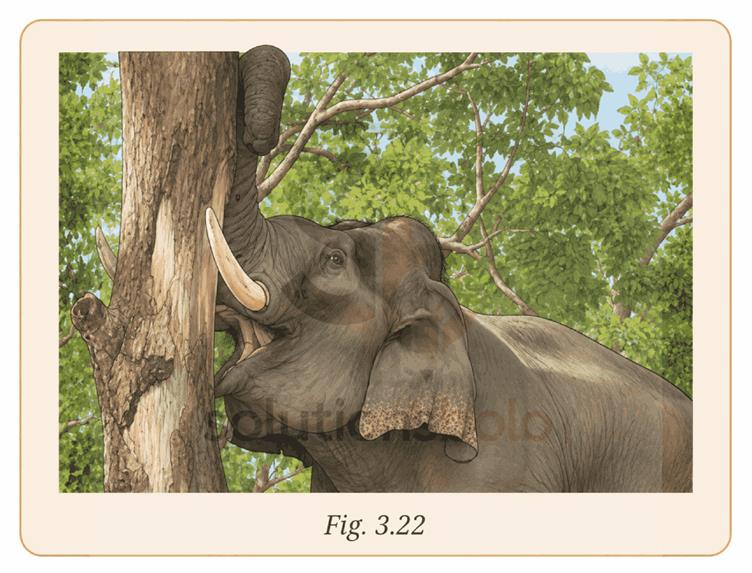
8. In a forest, it was observed that one of the trees was severely debarked by an elephant to meet its food requirements, as the bark is a rich source of nutrients (Fig. 3.22). Based on your learning, answer the following:
(i) Which function(s) of the tree is/are hampered by debarking?
(ii) Which plant tissue would be affected by further damage to the tree trunk even after debarking?
(iii) Which function of the tree would be hampered if the tissues beneath the bark were severely damaged?
(iv) What assumptions are you making to answer the questions above? How would the answer change if your assumptions are also changed?
Answer: (i) Debarking damages the bark, which contains phloem. As a result, the transport of food from leaves to roots and other parts of the plant is hampered, affecting growth and survival.
(ii) After the bark is removed, further damage may affect the xylem tissue beneath it. Xylem is responsible for transporting water and minerals from roots to the rest of the plant.
(iii) If tissues beneath the bark, especially xylem, are damaged, water and mineral transport from roots to leaves will be affected, disrupting photosynthesis, growth and overall functioning of the tree.
(iv) I assume that the bark contains phloem and that debarking has removed it while leaving the xylem mostly intact. If damage extends deeper, additional functions such as water transport would also be affected.
Explanation:
(i) The bark contains phloem tissue, which transports food prepared in the leaves to other parts of the plant. When the bark is removed, this transport pathway is disrupted. Consequently, roots may not receive sufficient nutrients, affecting growth, storage and overall health of the tree. If the damage is severe and extends around the trunk, the tree may eventually die because the downward movement of food is blocked.
(ii) Beneath the bark lies the vascular tissue, including xylem. If the damage extends deeper into the trunk, the xylem may be injured. Since xylem transports water and minerals from roots to leaves, damage to it can severely affect the plant’s ability to supply water and nutrients to aerial parts. This would weaken the tree and reduce its chances of survival.
(iii) Severe damage to tissues beneath the bark would impair the transport of water and minerals through the xylem. Leaves may not receive enough water for photosynthesis and other metabolic activities. This would result in wilting, reduced growth, poor food production and eventual decline of the tree. Thus, the efficient conduction of water and minerals is the major function affected by such damage.
(iv) The answers assume that only the bark, including the phloem, has been removed and that the xylem remains largely undamaged. If the injury extends into the xylem, water and mineral transport would also be disrupted. If only a small section of bark is removed, the tree may recover. However, if the bark is completely removed around the trunk, food transport may stop entirely, leading to the death of the tree.
9. Aamrapali observed that a young mango sapling’s stem bends flexibly during monsoon winds and does not break. Which tissue is responsible for this flexibility? Predict and provide your explanation of the impact if the existing tissue was replaced by sclerenchyma.
Answer: The flexibility of the young mango stem is due to collenchyma tissue. If it were replaced by sclerenchyma, the stem would become hard and rigid, making it more likely to break during strong monsoon winds.
Explanation: Collenchyma tissue provides mechanical support while maintaining flexibility in young plant parts. This allows the mango sapling to bend during strong winds without breaking. If collenchyma were replaced by sclerenchyma, the stem would become much harder and less flexible because sclerenchyma cells have thick lignified walls and are dead at maturity. The stem would resist bending and could crack or break more easily under the force of monsoon winds.
10. Sohan designed an experiment for the regeneration of sugarcane, where he used cuttings to grow sugarcane. He used two types of cuttings, type ‘A’ and type ‘B’ (Fig. 3.23). After a few weeks, type ‘B’ cuttings sprouted and developed into sugarcane plants, whereas the type ‘A’ cuttings did not sprout.
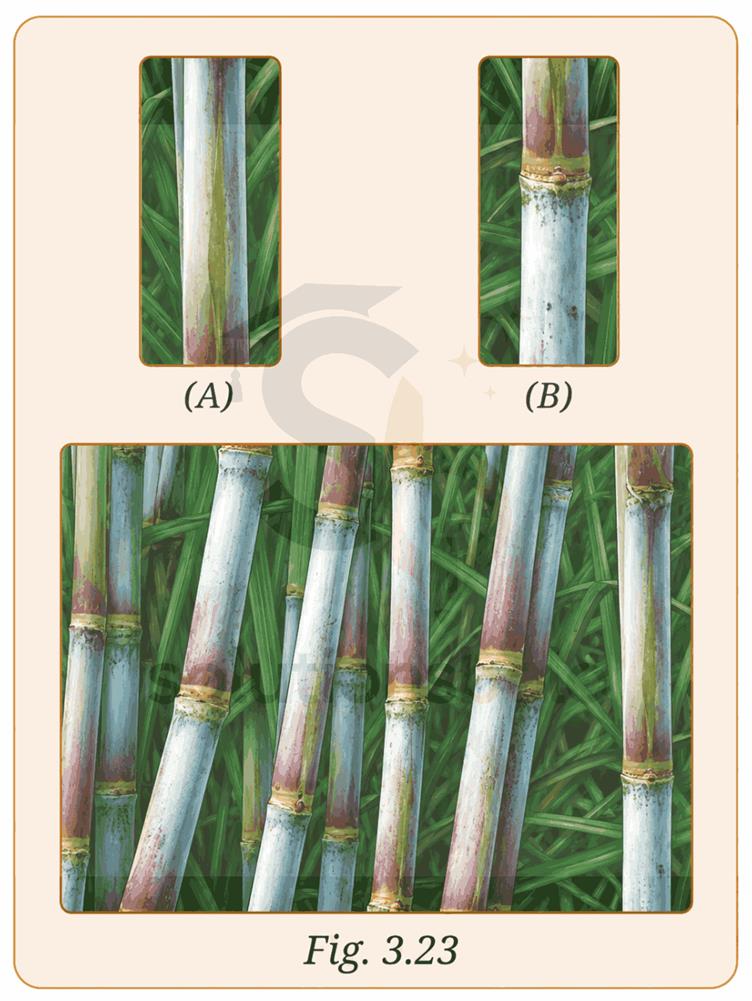
(i) Why were the type ‘B’ cuttings able to grow as sugarcane but type ‘A’ could not?
(ii) What difference was present in type ‘B’ compared to type ‘A’?
(iii) What observation or measurement was made to determine whether this change had an effect?
(iv) What parameters should be kept the same for both types of cuttings to ensure a fair comparison?
Answer: (i) Type B cuttings contained buds or meristematic tissue capable of cell division and growth. Type A cuttings lacked these growing points, so they could not produce new shoots and develop into plants.
(ii) Type B had one or more healthy buds (nodes) containing meristematic tissue, whereas Type A lacked functional buds. This difference enabled Type B to produce shoots and roots.
(iii) The observation was whether the cuttings sprouted and developed into new sugarcane plants. The appearance of shoots, leaves, roots and overall growth indicated successful regeneration.
(iv) Both cuttings should receive the same soil, water, sunlight, temperature, nutrients, planting depth and duration of growth. Keeping these factors constant ensures a fair comparison.
Explanation: (i) Type B cuttings were able to sprout because they possessed buds containing meristematic tissue. Meristematic cells actively divide and produce new plant organs. Type A cuttings lacked such growing regions and therefore could not initiate growth. Since new shoots originate from buds, only the cuttings with viable buds were capable of developing into complete sugarcane plants.
(ii) The main difference was the presence of active buds in Type B cuttings. Buds contain apical meristematic tissue that can divide repeatedly and form new shoots. Type A either lacked buds or had non-functional buds. Therefore, Type B possessed the biological structures necessary for regeneration, while Type A did not.
(iii) The effectiveness of the cuttings was determined by observing shoot emergence, root formation and subsequent plant growth. Type B showed sprouting and development into healthy sugarcane plants, while Type A failed to do so. Comparing the number of sprouts, plant height or survival rate would provide measurable evidence of the effect of the difference between the two cuttings.
(iv) For a valid experiment, all conditions except the type of cutting should remain identical. Both cuttings should be planted in the same soil type, receive equal water, sunlight, nutrients, temperature and planting depth and be observed for the same period. Controlling these variables ensures that any difference in growth results from the presence or absence of buds rather than environmental factors.
11. During the discussion in class, Rohan gives a statement that, “A tissue is a group of similar cells performing similar functions”. But Rajiv counter argues that, “this is true in case of simple tissues but little different in case of complex tissues”. Provide your explanation in view of the discussion in class.
Answer: Rohan’s statement is correct for simple tissues, where similar cells perform similar functions. Rajiv is also correct because complex tissues contain different kinds of cells that work together to perform a common function.
Explanation: Simple tissues, such as parenchyma, collenchyma and sclerenchyma, are made of similar cells performing similar functions. However, complex tissues like xylem and phloem consist of different types of cells working together for a common purpose. For example, xylem contains vessels, tracheids, fibres and parenchyma. Therefore, Rohan’s definition applies mainly to simple tissues, while Rajiv correctly points out that complex tissues are composed of dissimilar cells performing a shared function.
12. Coconut husk fibres are used for mats which are tough and fibrous. Which tissue has structural features suitable for providing this strength? Explain why living parenchyma couldn’t serve the same purpose.
Answer: Coconut husk fibres are made of sclerenchyma tissue. Their thick lignified walls provide great strength and toughness. Living parenchyma cells have thin walls and cannot provide the same mechanical support.
Explanation: Sclerenchyma tissue is responsible for the toughness and strength of coconut husk fibres. Its cells are dead at maturity and possess thick, lignified cell walls that provide rigidity and mechanical support. In contrast, parenchyma cells are living, thin-walled and mainly involved in storage and metabolic activities. Because they lack thick lignified walls, parenchyma tissue cannot withstand the stresses required for making strong fibres and mats.
13. Vibha claims to her friend Neha that, “Meristematic cells are located only at the root and shoot apices”. What do you think about this statement? What question can Neha ask Vibha to help her understand further if the statement is incorrect?
Answer: Vibha’s statement is incomplete. Meristematic tissue is also present as lateral meristem (cambium) and intercalary meristem. Neha can ask, “How does a stem increase in girth if meristems occur only at root and shoot tips?”
Explanation: Meristematic tissues are not restricted to root and shoot apices. Besides apical meristems, plants also possess intercalary meristems near nodes and lateral meristems (cambium) along stems and roots. Intercalary meristems help increase length, while lateral meristems increase girth. To help Vibha understand, Neha could ask, “Which tissue causes secondary growth and increase in stem thickness if meristems exist only at the tips?”
14. A plant cell and an animal cell are of the same size.
(i) Which cell will have a larger vacuole? Give reasons.
(ii) What assumptions are you making to answer the question above?
(i) Which cell will have a larger vacuole?
Answer: (i) The plant cell will generally have a larger vacuole. A large central vacuole stores water and dissolved substances and helps maintain turgidity, which is important for structural support in plants.
(ii) I assume that both cells are mature and typical in structure. If the plant cell is very young or the animal cell has unusually large vacuoles, the comparison may differ.
Explanation: (i) Plant cells usually contain one large central vacuole that occupies a significant portion of the cell volume. This vacuole stores water, nutrients and wastes while maintaining turgor pressure that supports the plant body. Animal cells either lack large vacuoles or contain several small vacuoles. Therefore, even when both cells are the same size, the plant cell typically possesses a much larger vacuole due to its role in storage and support.
(ii) The answer assumes that the cells are mature and representative of normal plant and animal cells. It also assumes that the plant cell is not meristematic and that the animal cell is not specialised for unusual storage functions. If these assumptions change, the relative size of the vacuoles could vary, although in most ordinary cases the plant cell will have the larger vacuole.
15. A textbook states, “Each plant tissue performs only one specific function”. What questions would you ask to critically examine the correctness of this statement? What examples of tissues would you take to find out the answers to these questions?
Answer: To examine this statement, I would ask whether a tissue can perform more than one function. Examples such as parenchyma, epidermis and xylem show that some tissues perform multiple roles in plants.
Explanation: To critically evaluate the statement, I would ask: Can one tissue perform several functions? Do all cells within a tissue have exactly the same role? Does a tissue contribute to support, storage and transport simultaneously? To answer these questions, I would study tissues such as parenchyma (storage, photosynthesis, healing), epidermis (protection and gas exchange) and xylem (water transport and support). These examples show that many plant tissues perform more than one function.
The Journey Beyond – (Questions and Answers of Page 47)
1. Visit a doctor and find out what happens in ligament rupture, cartilage rupture and fracture of bones. How can we reduce the risk by changing our lifestyle and nutritional balance?
Answer: A ligament rupture is a tear in the ligament, cartilage rupture damages cushioning tissue in joints and a fracture is a break in a bone. Regular exercise, good posture and a balanced diet rich in calcium and vitamin D reduce risk.
Explanation: A ligament rupture occurs when a ligament connecting bones is overstretched or torn, causing pain and instability. Cartilage rupture damages the smooth cushioning tissue in joints, leading to pain and restricted movement. A fracture is a crack or break in a bone. Risks can be reduced through regular physical activity, maintaining healthy body weight, using proper sports techniques and consuming a balanced diet rich in calcium, vitamin D, proteins and minerals that strengthen bones and connective tissues.
2. Perform the following activity.
(i) Sit with your feet flat on the floor.
(ii) Place your fingers on the back of your ankle just above the heel (Fig. 3.24).
(iii) Point your toes down and up and you will feel the tendon moving.
Tendons are designed to withstand huge pulling forces. Try exploring other tendons in your body around the different joints.
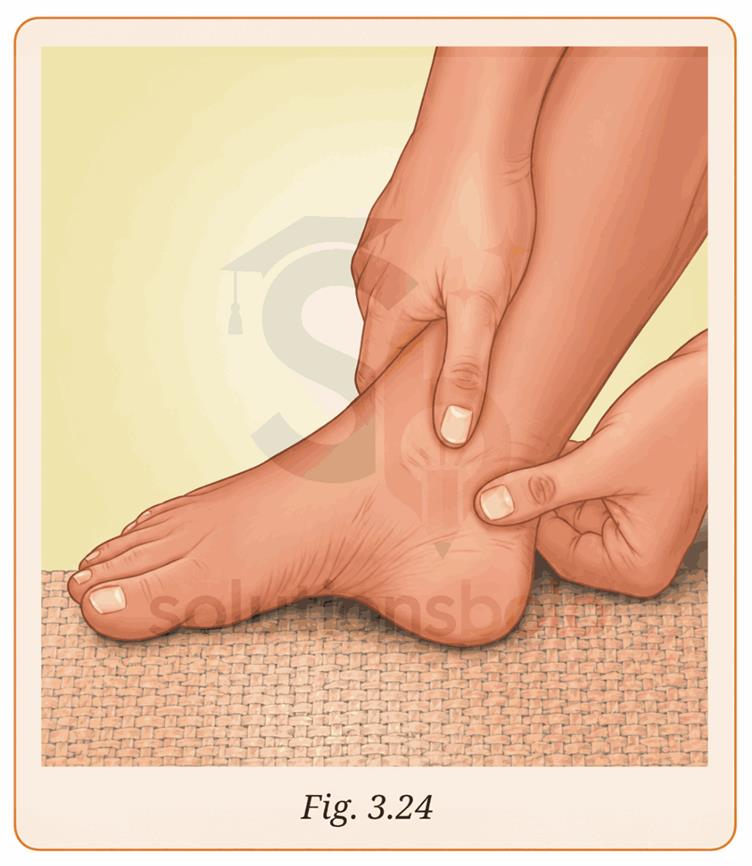
Answer: When the toes move up and down, the tendon near the heel can be felt moving. Tendons connect muscles to bones and transmit force. Similar tendons can be observed around the wrist, elbow, knee and fingers.
Explanation: The activity demonstrates the movement of tendons, especially the Achilles tendon near the heel. Tendons are strong connective tissues that attach muscles to bones and help produce movement. When muscles contract, tendons pull on bones, causing joints to move. Similar tendon movements can be felt at the wrist while moving fingers, near the elbow during arm movements and behind the knee during leg movements. Their strength allows them to withstand considerable pulling forces.
3. Reflect on any of the physical practices you are familiar with, such as yoga, kabaddi, etc. How would it support bone and muscle health?
Answer: Yoga and kabaddi strengthen muscles, improve flexibility, increase joint mobility and enhance balance. Regular practice promotes bone strength, improves blood circulation and reduces the risk of injuries, helping maintain overall musculoskeletal health.
Explanation: Physical activities such as yoga and kabaddi contribute significantly to bone and muscle health. Yoga improves flexibility, posture, balance and muscle strength through controlled stretching and movement. Kabaddi develops muscular strength, endurance, agility and coordination. Weight-bearing activities stimulate bone growth and increase bone density. Both practices improve circulation, support healthy joints, reduce stress and lower the risk of injuries. Regular participation helps maintain a strong and healthy musculoskeletal system.
4. Reflect on any gardening methods you know, such as pruning, grafting, irrigation or crop rotation. How does each practice support the healthy functioning of plant tissues like meristems, conducting tissues or supporting tissues?
Answer: Pruning encourages meristem growth, grafting combines desirable tissues, irrigation supplies water through conducting tissues and crop rotation improves soil health. These practices help plant tissues function efficiently and support healthy growth.
Explanation: Pruning removes unwanted branches and stimulates the activity of meristematic tissues, promoting new growth. Grafting joins tissues from two plants, allowing desirable characteristics to combine. Irrigation ensures adequate water supply for xylem transport and proper functioning of plant cells. Crop rotation improves soil fertility and reduces disease, helping roots and conducting tissues remain healthy. Together, these practices support growth, transport, support and overall tissue health in plants.
5. Turn a nature walk into a research project.
(i) Observe different leaves and study their adaptations for various environments, such as desert, very moist or aquatic habitats.
(ii) Consult an elder community resource persons about their knowledge on different plant leaves, such as leaves that remain fresh for a long time, repel water or deter insects. Find out their traditional uses, such as making plates, preparing cooling wraps or functioning as insect repellents.
Answer: (i) Desert leaves are often small or modified into spines to reduce water loss. Moist-habitat leaves are broad and thin. Aquatic leaves may have air spaces and floating structures that help them survive.
(ii) Community elders often identify leaves used for making plates, cooling wraps or insect repellents. Some leaves remain fresh longer due to waxy surfaces, while others repel insects because of natural chemical compounds.
Explanation: (i) Leaves show remarkable adaptations to their environments. Desert plants often have small, waxy or spine-like leaves to reduce transpiration. Plants in moist habitats generally possess broad leaves that maximise photosynthesis. Aquatic plants may have large air spaces for buoyancy and stomata only on upper surfaces. These adaptations help plants efficiently manage water, gas exchange and sunlight according to environmental conditions.
(ii) Traditional knowledge reveals many uses of leaves. Banana and sal leaves are commonly used for plates because they remain fresh and strong. Some leaves have waxy coatings that repel water, while neem leaves contain natural compounds that deter insects. Certain medicinal leaves are used in cooling wraps and herbal remedies. Such practices demonstrate how people have long understood and utilised plant characteristics for practical and cultural purposes.
6. Study various dance forms of different tribal communities across the country. Each student learn and experience at least five steps. Observe the joint movements involved in performing these steps and then develop a dance or drama on the concept of joint movements. Perform this at the school’s annual function so that students from different grades can learn from it.
Answer: Different dance forms involve coordinated movements of the shoulder, hip, knee, ankle, elbow and neck joints. Learning dance steps helps understand joint functions, flexibility, balance, coordination and the importance of movement in daily life.
Explanation: Dance forms from tribal and other communities provide excellent examples of joint movements. Shoulders and hips use ball-and-socket joints for wide-ranging motions, knees and elbows use hinge joints for bending and the neck uses a pivot joint for rotation. Practising dance improves flexibility, coordination, balance and muscle strength. Creating a performance based on joint movements can help students understand human anatomy through an engaging and practical experience.
7. Will it be possible to obtain a complete animal from an animal cell like plants? If yes, what would be the advantages and challenges of this development
Answer: It may be possible in certain cases through cloning and advanced biotechnology. Advantages include species conservation and medical research. Challenges include ethical concerns, high costs, low success rates, genetic issues and animal welfare concerns.
Explanation: Unlike many plant cells, most animal cells cannot naturally regenerate an entire organism. However, cloning techniques have shown that a complete animal can sometimes be produced from the nucleus of a body cell. Potential advantages include conserving endangered species, improving livestock breeding and advancing medical research. Challenges include ethical issues, high failure rates, developmental abnormalities, reduced genetic diversity, high costs and concerns regarding the welfare of cloned animals.
Scientists Mentioned in the Chapter:
1. B. G. L. Swamy (Indian botanist)
Year: 1957 (Awarded the Padma Shri and Birbal Sahni Medal)
Contribution & Discovery:
An eminent Indian botanist and plant anatomist who made significant contributions to the study of plant morphology and anatomy. He carried out extensive research on ferns and authored the famous book The Structure and Life of Ferns. His work greatly advanced the understanding of plant structure and development. He was honoured with the Birbal Sahni Medal and the Padma Shri in 1957 for his contributions to botanical science.
2. Sipra Guha Mukherjee (Indian botanist)
Year: 20th Century
Contribution & Discovery:
An Indian botanist known for her important contributions to plant anatomy and botanical research. She worked extensively on the structure and development of plants and contributed significantly to botanical education and research in India. Her work helped improve the scientific understanding of plant tissues and plant morphology.
3. S. C. Maheshwari (Indian botanist)
Year: 20th Century
Contribution & Discovery:
A renowned Indian botanist best known for his pioneering work in plant embryology and plant tissue culture. He developed techniques for the in vitro culture of plant tissues and embryos, which contributed greatly to modern plant biotechnology. His research helped scientists understand plant development and regeneration and laid the foundation for many advances in tissue culture methods.
4. F. C. Steward (British botanist)
Year: 1958
Contribution & Discovery:
An American plant physiologist who successfully demonstrated totipotency using carrot phloem cells. He showed that a single mature plant cell could develop into a complete plant under suitable laboratory conditions, providing strong evidence for the concept of plant tissue culture and cellular totipotency.
Hypothetical / Imagination Based Questions Answers
You are not studying science merely to pass an exam. You are learning how scientists think.
1. Suppose a plant suddenly loses all its phloem tissue due to severe damage, but its xylem remains functional. What would happen to the plant after a few weeks? Explain your reasoning.
Answer: If phloem is damaged, food prepared in the leaves cannot reach roots and other plant parts. Although xylem continues transporting water and minerals, the roots gradually starve, growth slows and the plant may eventually die.
| Think Like a Scientist |
A scientist would examine which transport system has failed. Since xylem still supplies water and minerals, leaves may continue photosynthesis for some time. However, without phloem, the food produced cannot be distributed to roots and growing tissues. As stored food reserves are exhausted, roots weaken and begin to die. This would reduce water absorption, further affecting the entire plant. Therefore, the plant’s decline would occur gradually, demonstrating the importance of phloem in maintaining life.
2. Imagine that collenchyma tissue in a young plant stem is replaced entirely by sclerenchyma tissue. How would this change affect the plant’s growth, flexibility and survival during strong winds?
Answer: The stem would become hard and rigid instead of flexible. While it may gain strength, it would lose the ability to bend easily. As a result, young stems could crack or break during strong winds.
| Think Like a Scientist |
A scientist would compare the functions of collenchyma and sclerenchyma. Collenchyma provides support along with flexibility, allowing young stems to bend without damage. Sclerenchyma provides great strength but very little flexibility because of its thick lignified walls. Replacing collenchyma with sclerenchyma would make the stem rigid and less adaptable to movement. During strong winds, the inability to bend could increase the chances of cracking or breakage, reducing the plant’s chances of survival.
3. A scientist develops a plant in which stomata are completely absent from the leaves. Predict the effects on photosynthesis, transpiration and overall plant survival.
Answer: Without stomata, carbon dioxide cannot enter leaves efficiently and transpiration almost stops. Photosynthesis decreases significantly, water movement is affected and the plant becomes weak, eventually leading to poor growth and death.
| Think Like a Scientist |
A scientist would investigate how the absence of stomata affects essential plant processes. Stomata allow carbon dioxide to enter for photosynthesis and facilitate transpiration. Without them, food production would decrease because carbon dioxide intake becomes limited. Reduced transpiration would also affect the upward movement of water and minerals through xylem. The plant might initially survive using stored food, but over time its growth, metabolism and overall health would decline, leading to eventual death.
4. Suppose the ligaments in your knee joint suddenly become very weak while the bones and muscles remain normal. How would this affect your movement and daily activities? Explain.
Answer: Weak ligaments would make the knee joint unstable. Walking, running and climbing stairs would become difficult because the bones would not remain securely connected. The risk of joint dislocation and injury would increase significantly.
| Think Like a Scientist |
A scientist would focus on the role of ligaments in stabilising joints. Although muscles and bones remain healthy, weak ligaments cannot hold the bones firmly together. As a result, the knee would become unstable during movement. Everyday actions such as walking, running or jumping would require greater effort and caution. Frequent abnormal joint movements could cause pain, injuries and dislocations. This situation demonstrates that healthy movement depends not only on muscles and bones but also on strong connective tissues.
5. Imagine that human bones were made of cartilage instead of hard bone tissue. How would this change the body’s support, protection and movement?
Answer: The body would become softer and less stable. Organs would receive less protection, standing upright would be difficult and movements would be less efficient because cartilage lacks the strength and rigidity of bones.
| Think Like a Scientist |
A scientist would compare the mechanical properties of bone and cartilage. Bones are hard, strong and capable of supporting body weight while protecting vital organs. Cartilage is flexible but much less rigid. If the skeleton were made entirely of cartilage, the body would lose structural stability. Standing, walking and lifting objects would become difficult. Important organs such as the brain and heart would be more vulnerable to injury. Thus, flexibility would increase, but support and protection would decrease dramatically.
6. A researcher discovers a plant whose meristematic cells have permanently lost the ability to divide. What effects would this have on the plant’s growth, repair and development?
Answer: The plant would stop growing because no new cells could be produced. Damaged tissues would not be repaired and new roots, shoots, leaves or flowers would fail to develop, severely affecting survival.
| Think Like a Scientist |
A scientist would identify meristematic cells as the source of new plant cells. If these cells could no longer divide, growth would immediately stop. The plant would be unable to produce new leaves, roots, branches or flowers. Injuries could not be repaired because replacement cells would not be formed. Over time, ageing tissues would continue to deteriorate without renewal. This would severely limit adaptation, reproduction and survival, showing why cell division is essential for plant growth and maintenance.
7. Suppose scientists create an animal whose body contains only one type of tissue instead of specialised tissues. Would the animal be able to survive efficiently? Justify your answer based on the concept of division of labour in multicellular organisms.
Answer: Such an animal would not survive efficiently because one tissue cannot perform all functions. Movement, transport, protection, coordination and digestion require specialised tissues working together through division of labour.
| Think Like a Scientist |
A scientist would analyse the importance of division of labour in multicellular organisms. Specialised tissues perform different tasks such as protection, transport, movement and communication. If an animal possessed only one tissue type, all these functions would have to be performed by the same cells, greatly reducing efficiency. The organism would struggle to meet its basic needs and respond to environmental changes. Therefore, specialised tissues are essential for the survival and complexity of multicellular animals.
8. Suppose blood suddenly loses its ability to transport oxygen while all other tissues and organs remain normal. What effects would this have on the body’s cells, tissues and overall survival? Explain your answer.
Answer: Cells would not receive sufficient oxygen for respiration and energy production. Tissues and organs would gradually stop functioning, leading to severe damage and eventually death because oxygen is essential for life processes.
| Think Like a Scientist |
A scientist would trace the consequences of oxygen deprivation at the cellular level. Oxygen is required for efficient energy production through cellular respiration. If blood could no longer transport oxygen, cells would quickly experience energy shortages. High-energy organs such as the brain, heart and muscles would be affected first. As energy production declines, tissues would fail to perform their functions properly. Despite healthy organs initially, prolonged oxygen deficiency would ultimately lead to organ failure and death.
Very Short Answer Type Questions
1. What is a tissue?
Answer: A tissue is a group of similar cells that work together to perform a specific function in an organism.
2. Which tissue is responsible for the growth of plants?
Answer: Meristematic tissue is responsible for plant growth because its cells continuously divide and produce new cells.
3. What is the main function of xylem?
Answer: Xylem transports water and dissolved minerals from roots to different parts of the plant.
4. Differentiate between tendon and ligament.
Answer: Tendons connect muscles to bones, whereas ligaments connect bones to bones and stabilize joints.
5. Which type of joint is present in the shoulder?
Answer: The shoulder contains a ball-and-socket joint that allows movement in almost all directions.
Short Answer Type Questions
1. Why is division of labour important in multicellular organisms?
Answer: Division of labour allows different tissues and organs to perform specialised functions efficiently. This increases the overall efficiency of the organism. For example, muscular tissue enables movement, nervous tissue controls activities and connective tissue provides support. Because each tissue performs a specific task, multicellular organisms can carry out complex life processes more effectively than if all cells performed the same function.
2. How do xylem and phloem differ in their functions?
Answer: Xylem and phloem are conducting tissues in plants. Xylem transports water and minerals from the roots to the leaves and other parts of the plant. Phloem transports food prepared in the leaves to all parts of the plant. Together, they ensure the proper distribution of essential substances required for growth, metabolism and survival throughout the plant body.
3. Why is collenchyma important in young plant stems?
Answer: Collenchyma provides support and flexibility to young stems and leaf stalks. Its cells have unevenly thickened walls that allow the plant to bend without breaking. This flexibility helps young plant parts withstand wind and other mechanical stresses. Without collenchyma, young stems would become either too weak to stand upright or too rigid to bend safely during movement.
4. How do bones and muscles work together to produce movement?
Answer: Bones provide a framework for the body, while muscles generate movement through contraction and relaxation. Muscles are attached to bones by tendons. When muscles contract, they pull on bones, causing movement at joints. Different muscles work in coordination to perform various activities such as walking, running, lifting and bending. Thus, bones and muscles function together as a movement system.
5. Why is blood considered a connective tissue?
Answer: Blood is considered a connective tissue because it connects different body parts by transporting oxygen, nutrients, hormones and waste materials. It consists of cells suspended in a fluid matrix called plasma. Blood helps maintain coordination among organs and tissues by carrying substances throughout the body. Its transport function makes it an important specialised connective tissue.
Frequently Aked Questions (FAQs) of the Chapter:
1. Why are sclerenchyma cells dead at maturity?
Answer: Sclerenchyma cells develop thick, lignified walls that provide strength and protection. During maturation, the living contents disappear, leaving dead cells behind. These dead cells act as strong supporting structures for plant parts. Because their primary role is mechanical support rather than metabolism, being dead does not affect their function. Their rigid walls help plants withstand physical stress.
2. Why are stomata called the gateways of leaves?
Answer: Stomata are tiny pores present mainly on leaf surfaces. They allow carbon dioxide to enter for photosynthesis and permit oxygen and water vapour to exit. Through transpiration, they also help regulate water movement within the plant. Because they control the exchange of gases between the plant and its environment, stomata are often called the gateways of leaves.
3. Why does cartilage not have the same hardness as bone?
Answer: Cartilage contains a flexible matrix that allows bending and cushioning, whereas bones contain mineral salts that make them hard and rigid. Cartilage reduces friction at joints and supports soft structures like the nose and ears. Its flexibility is important for smooth movement. Therefore, cartilage is softer than bone because it is designed for flexibility rather than maximum strength.
4. Why can cardiac muscles work continuously without fatigue?
Answer: Cardiac muscles contain numerous mitochondria and receive a rich blood supply. This ensures a continuous supply of oxygen and nutrients for energy production. As a result, the heart can contract and relax throughout life without tiring easily. Their specialised structure allows them to maintain a regular rhythm and pump blood efficiently to all parts of the body.
5. Why is tissue culture important in plants?
Answer: Plant tissue culture allows new plants to be grown from small pieces of plant tissue under controlled conditions. It is based on the totipotency of plant cells. This technique helps in rapid multiplication of desirable plants, conservation of rare species and production of disease-free plants. Tissue culture is widely used in agriculture, horticulture and scientific research for plant improvement.