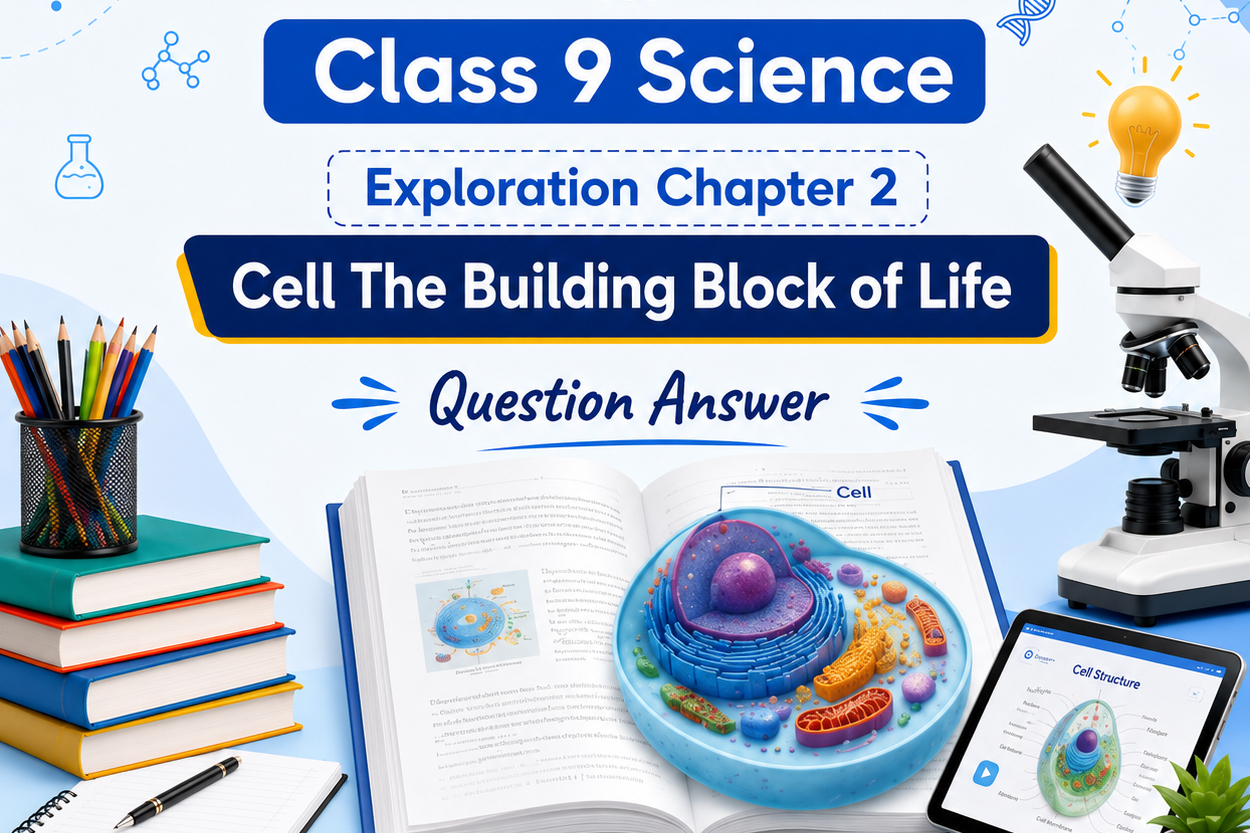
NCERT Solutions (2026-27) of Class 9 Science Exploration Chapter 2 “Cell: The Building Block of Life” explains that cells are the basic structural and functional units of living organisms. Where does a cell come from? The chapter discusses discovery of cells, cell theory, plant and animal cells, cell organelles, osmosis, cell division, mitosis, meiosis and cancer cells. It also explains the functions of nucleus, mitochondria, plastids, vacuoles, ribosomes and endoplasmic reticulum. These solutions help students understand important biological concepts through clear explanations, diagrams and competency-based questions scientific concepts designed according to the latest CBSE syllabus.
Chapter 2 Quick Links:
3. Common Mistakes Students Make:
4. Important Keywords and Key Points for MCQs:
5. Intext Questions and Answers:
6. Exercise Questions and Answers:
7. Scientists Mentioned in the Chapter:
8. Thinking-Based / Competency-Based Questions:
9. Very Short Answer Type Questions:
10. Short Answer Type Questions:
11. Long Answer Type Questions will be added shortly.
Chapter Introduction:
Life appears in countless forms, yet every living organism is built from tiny units called cells. The discovery of cells became possible after the invention of the microscope. In 1665, Robert Hooke (रॉबर्ट हुक) observed cork and named the tiny compartments “cells.” This chapter explains cell structure organelles, cell division and why the cell is called the “Building Block of Life.”
Quick Revision Notes:
• All organisms are made up of one or many cells that perform life processes.
• Robert Hooke discovered cells in cork in 1665 using a simple microscope.
• Prokaryotic cells lack a true nucleus and membrane-bound organelles.
• Eukaryotic cells contain a well-defined nucleus (सुस्पष्ट केंद्रक) and specialised organelles.
• The nucleus (केंद्रक) acts as the control centre (नियंत्रण केंद्र) of the cell and contains chromosomes (गुणसूत्र).
• Chromosomes are made of DNA and proteins carrying hereditary information.
• Cytoplasm contains cell organelles that perform specific cellular functions.
• Cell membrane surrounds the cell and regulates movement of substances.
• The cell membrane is selectively permeable, allowing only certain materials to pass.
• Plant cells possess a rigid cell wall for protection, support and shape.
• Mitochondria are called the powerhouse (बिजलीघर) of the cell because they produce energy in the form of ATP (Adenosine Triphosphate).
• Endoplasmic reticulum helps in transport and synthesis of proteins and lipids.
• Golgi apparatus modifies, packages and transports cellular materials.
• Lysosomes contain digestive enzymes that break down wastes and foreign substances.
• Plastids are special organelles found in plant cells (पादप कोशिका).
Common Mistakes Students Make in the Chapter:
• Chloroplasts contain chlorophyll and perform photosynthesis. In contrast, Chromoplasts provide colours to fruits and flowers, while leucoplasts store food materials.
• Mitosis produces two identical daughter cells (संतति कोशिकाएँ) for growth and repair. In contrast, Meiosis forms gametes with half the chromosome number and creates genetic variation.
• Vacuoles are large and prominent in plant cells but usually small in animal cells. Vacuoles store food, water, pigments and waste substances and help maintain turgidity. This difference is commonly asked in MCQs and short answers.
• Diffusion helps in the movement of substances from higher to lower concentration while Osmosis is the movement of water through a selectively permeable membrane from higher to lower water concentration.
• Normal cells grow in a controlled manner, whereas cancer cells divide uncontrollably and form tumours.
• Programmed Cell Death (PCD) naturally removes unwanted (damaged, old, unnecessary) cells, while the spleen helps destroy old and damaged blood cells.
• Mycoplasma is among the smallest living cells and lacks a cell wall, whereas most bacteria possess a rigid cell wall for protection and shape.
Important Keywords and Key Points for MCQs:
Cell Membrane: A thin selectively permeable layer controlling movement of substances.
Cell Wall: A rigid outer covering found in plant cells.
Nucleus: The control centre of the cell containing genetic material.
Cytoplasm: Jelly-like substance where cell organelles are present.
Ribosome: The site of protein synthesis in the cell.
Plastids: Double membrane organelles found mainly in plant cells that help in food storage and pigment synthesis.
Chloroplast: Green plastid containing chlorophyll for photosynthesis.
Leucoplasts: Colourless plastids mainly involved in storing starch, oils and proteins in plant cells.
Vacuole: Storage organelle containing water, food and wastes.
Osmosis: Movement of water from higher water concentration to lower water concentration through a selectively permeable membrane.
Diffusion: Movement of substances (पदार्थो का गमन उच्च सांद्रता से कम सांद्रता की और जाना) from higher concentration to lower concentration.
Mitosis: Cell division producing identical daughter cells.
Meiosis: Cell division producing gametes with half chromosome number.
Cell Organelles: Special structures inside the cell that perform specific functions such as respiration, storage, protein synthesis and transport.
Prokaryotic Cell: A simple cell without a true nucleus and membrane-bound organelles. Example: bacteria.
Eukaryotic Cell: A complex cell containing a true nucleus and membrane-bound organelles. Plants and animals possess eukaryotic cells.
DNA: Deoxyribonucleic acid is the hereditary material carrying genetic instructions for growth, development and functioning of living organisms.
RNA: Ribonucleic acid that helps in protein synthesis and carries genetic information in some viruses.
Endoplasmic Reticulum (ER): A membrane network inside the cell helping in protein and lipid synthesis and transport of materials.
Golgi Apparatus: Cell organelle that modifies, packages, stores and transports substances received from the endoplasmic reticulum.
Lysosomes: Membrane-bound organelles containing digestive enzymes that break down wastes, foreign particles and damaged cell parts.
Synthetic cell: Research on synthetic cells may help future advances in medicine, biotechnology and artificial life studies.
Mycoplasma mycoides: A very small microorganism lacking a cell wall. It is among the simplest known living cells.
Programmed Cell Death (PCD): A controlled process in which cells die naturally to remove damaged or unnecessary cells from the body.
Intext Questions and Answers:
1. What argument would you give for the necessity of a cell wall in plants usually fixed in one place versus in animals usually moving from one place to the other?
Answer: Plants need rigid cell walls for protection and support because they remain fixed, while animals need flexible cells for movement.
Explanation: Plants are usually fixed in one place and cannot escape environmental stresses like strong winds, heavy rain and physical pressure. Therefore, plant cells need a rigid cell wall for protection, support and maintaining shape. Animals move actively from one place to another, so their cells need flexibility for movement. Hence, animal cells lack a rigid cell wall and have only a flexible cell membrane.
2. What consequences would you predict for a plant cell if its cell wall were to become as flexible as a cell membrane?
Answer: If the cell wall became flexible, plant cells would lose shape, support, protection and may burst due to excess water intake.
Explanation: The rigid cell wall gives shape, strength and protection to plant cells. If it became flexible like the cell membrane, plant cells would lose firmness and structural support. Excess water entering the cell could cause swelling and bursting. Plants would droop easily and fail to remain upright. The protective function of the wall against mechanical stress and environmental pressure would also reduce greatly.
3. Why is it important to cut the two potato pieces in roughly equal size and measure their initial weight before placing them in different liquids?
Answer: Equal-sized potato pieces ensure fair comparison, while measuring initial weight helps accurately observe osmotic changes caused by different liquids.
Explanation: Cutting the potato pieces into roughly equal sizes and measuring their initial weight ensures accuracy and fairness in the experiment. Equal-sized pieces have nearly the same surface area and water content initially. Therefore, any later increase or decrease in weight can be correctly linked to osmosis caused by the surrounding liquids, rather than differences in potato size or starting mass.
4. Do white flowers contain any pigment? Give reasons.
Answer: Yes, white flowers contain pigments but they mainly reflect all visible light equally, making petals appear white to human eyes.
Explanation: White flowers also contain pigments but they generally lack bright pigments such as red orange or yellow chromoplast pigments. Some white flowers possess colourless or faint pigments that reflect almost all colours of visible light equally. As a result, the flowers appear white. Therefore, white colour does not mean complete absence of pigments in flower petals.
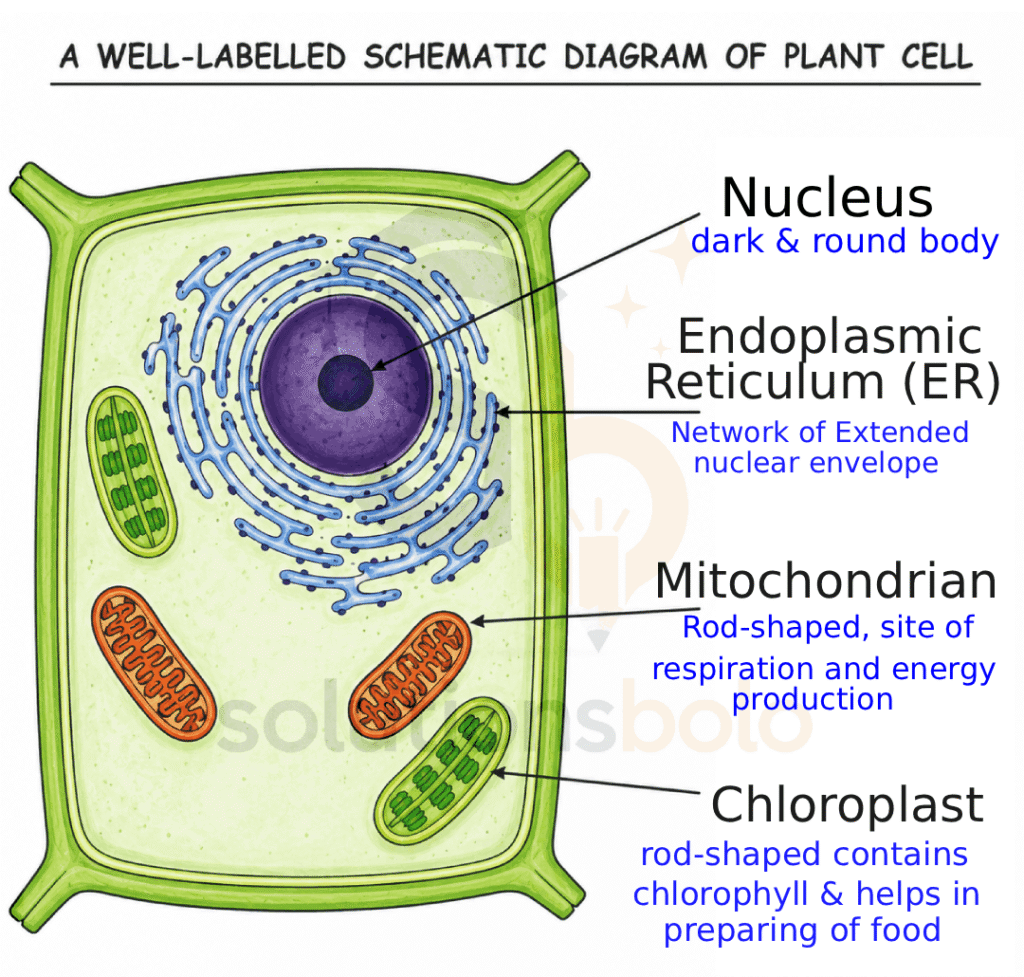
5. Draw a well-labelled schematic diagram of a plant or an animal cell using these clues — (i) Nucleus appears as a dark and round body inside the cell. (ii) ER spreads like a network of extended nuclear envelope. (iii) Mitochondria and chloroplasts are rod shaped.
Answer: The labelled diagram should clearly show nucleus, ER network, rod-shaped mitochondria, chloroplasts, vacuole, cytoplasm and cell membrane properly.
Explanation: The schematic diagram of a plant cell should clearly show the dark and round nucleus, ER spreading like a network from the nuclear membrane and rod-shaped mitochondria and chloroplasts. Other labelled parts should include the cell wall, cell membrane, cytoplasm, vacuole, Golgi apparatus and ribosomes. Proper labelling helps in understanding the structure and functions of different cell organelles clearly.
6. Instead of many small ones, why does a cell not have a single giant mitochondrion? How does this relate to the concept of surface area?
Answer: Many small mitochondria provide larger surface area, improving energy production efficiency and distributing ATP properly throughout the entire cell.
Explanation: Cells contain many small mitochondria instead of one giant mitochondrion because smaller mitochondria together provide a larger total surface area. The folded inner membrane, called cristae, carries out energy-producing reactions. Greater surface area increases ATP production efficiently. Small mitochondria can also spread throughout the cell, supplying energy where needed and maintaining better control over cellular activities.
7. If the skin cells start dividing by meiosis instead of mitosis, what do you think will happen to a cut on the skin?
Answer: Skin cuts would heal improperly because meiosis produces abnormal cells with half chromosome number instead of identical repair cells.
Explanation: Skin cells normally divide by mitosis to produce identical cells for growth and repair. If they start dividing by meiosis, the new cells would contain half the chromosome number and become genetically different. This would disturb normal tissue repair. As a result, cuts on the skin would heal slowly or improperly, leading to damaged and unhealthy skin tissues.
8. Where does a cell come from?
Answer: A cell comes from a pre-existing cell through cell division, ensuring growth, repair, reproduction and continuity of life processes.
Explanation: New cells arise from pre-existing cells through cell division. This idea was included in the cell theory by Rudolf Virchow. Cells divide to produce new cells for growth, repair of damaged tissues and reproduction. In unicellular organisms, cell division forms a new organism, while in multicellular organisms it increases the number of cells needed for body functions.
9. How have technological interventions facilitated the creation of new knowledge in understanding the world beyond the naked eye?
Answer: Microscopes and modern technologies helped scientists observe cells organelles, microbes and structures invisible to the naked human eye.
Explanation: Technological interventions such as microscopes, electron microscopes, imaging techniques and molecular tools helped scientists study structures invisible to the naked eye. They revealed cells organelles, chromosomes, bacteria and viruses in great detail. These discoveries improved understanding of life processes, cell functions, diseases and genetics, leading to major advancements in biology, medicine and scientific research.
10. How is the cell structural and functional unit of life?
Answer: Cells form body structures and perform essential life processes like respiration, nutrition, excretion, growth and reproduction in organisms.
Explanation: Cells form the basic structure of all living organisms and perform all vital life processes. Activities like respiration, nutrition, excretion, growth and reproduction occur inside cells. Tissues and organs are formed by groups of cells working together. Since cells both build the body structure and perform body functions, they are called the structural and functional unit of life.
11. How does a cell multiply?
Answer: A cell multiplies through cell division, mainly mitosis for growth and meiosis for formation of reproductive cells or gametes.
Explanation: Cells multiply by the process of cell division. In mitosis, a parent cell divides into two genetically identical daughter cells, helping in growth, repair and maintenance. In meiosis, reproductive cells divide twice to form four gametes with half the chromosome number. Cell division ensures continuity of life and increases the number of cells in organisms.
12. What if mung bean seeds are kept in a concentrated solution after soaking in water for 12 hours? What will happen to them?
Answer: Water moves out of soaked mung bean seeds through osmosis, causing shrinkage, reduced swelling and disturbed germination processes.
Explanation: After soaking, mung bean seeds absorb water and become swollen. If these seeds are placed in a concentrated solution, water moves out of their cells through osmosis. As a result, the seeds lose water, shrink and become less firm. Continuous water loss may stop normal germination and affect the metabolic activities required for proper growth of the seeds.
13. What is the future of the development of synthetic cells using non-living chemicals?
Answer: Synthetic cells may advance medicine, biotechnology, environmental protection and scientific research by helping scientists understand life processes better.
Explanation: The development of synthetic cells using non-living chemicals may greatly advance biotechnology and medicine. Scientists may use synthetic cells to study life processes, produce medicines, vaccines, enzymes and biofuels and solve environmental problems. Such research can improve disease treatment and industrial production. However, careful scientific control and ethical guidelines will be necessary for their safe use.
14. If a synthetic cell is developed, what may be the related ethical issues?
Answer: Synthetic cells may raise ethical concerns regarding artificial life creation, biosafety risks, environmental imbalance and misuse of biotechnology technologies.
Explanation: If synthetic cells are developed, ethical issues may arise regarding artificial creation of life, misuse in harmful activities, environmental imbalance and biosafety risks. Questions about ownership, control and limits of scientific research may also emerge. Therefore, strict regulations, responsible scientific practices and ethical monitoring will be essential to ensure that synthetic biology benefits society safely and fairly.
CBSE Class 9 Science Exploration Chapter 2 — Cell: The Building Block of Life Solutions Bolo
Exercises Questions and Answers:
1. Differentiate between the following pairs of terms based on the clues given in parentheses: (i) Cell membrane and cell wall (permeability) (ii) RER and SER (structure) (iii) Chloroplasts and chromoplasts (pigments)
Answer: (i) Cell membrane is selectively permeable and living, while cell wall is freely permeable, rigid, non-living and protective in plants.
(ii) RER contains ribosomes on its surface, giving rough appearance, while SER lacks ribosomes and therefore appears smooth structurally.
(iii) Chloroplasts contain green chlorophyll pigments for photosynthesis, while chromoplasts contain red, yellow or orange pigments for coloration.
Explanation:
(i) Cell Membrane vs Cell Wall – Permeability
| Cell Membrane | Cell Wall |
| It is selectively permeable and allows only certain substances to pass through. | It is freely permeable and allows water and most dissolved substances to pass through. |
| Controls the movement of substances into and out of the cell. | Mainly provides protection, support and rigidity to the cell. |
(ii) RER vs SER – Structure
| RER (Rough Endoplasmic Reticulum) | SER (Smooth Endoplasmic Reticulum) |
| Ribosomes are attached on its surface, giving it a rough appearance. | Ribosomes are absent on its surface giving it a smooth appearance. |
| Mainly involved in protein synthesis and transport. | Mainly involved in lipid synthesis and detoxification. |
(iii) Chloroplasts vs Chromoplasts – Pigments
| Chloroplasts | Chromoplasts |
| Contain green pigment chlorophyll for photosynthesis. | Contain red, yellow and orange pigments. |
| Mainly found in green plant parts like leaves. | Mainly found in colourful fruits and flowers. |
2. Two similar animal cells are placed in two different solutions:
• Cell X is placed in pure water.
• Cell Y is placed in a concentrated salt solution.
Cells are observed after some time. Cell X swells and Cell Y shrinks. Which statement provides the correct explanation for the above observations?
(i) Salt molecules moved into Cell Y, causing it to shrink. (ii) Water moved into Cell X and more water moved out of Cell Y than the salt solution entered in it. (iii) Water moved into Cell X and moved out of Cell Y through the cell membrane. (iv) Solute movement caused osmosis in both cells.
Answer: The correct statement is (iii). Water entered Cell X and moved out of Cell Y through the selectively permeable membrane.
Explanation: The correct explanation is statement (iii). In pure water, water entered Cell X through the selectively permeable cell membrane by osmosis, causing the cell to swell. In the concentrated salt solution, water moved out of Cell Y into the surrounding solution, causing the cell to shrink. Osmosis involves movement of water molecules, not direct movement of salt causing the shrinking effect.
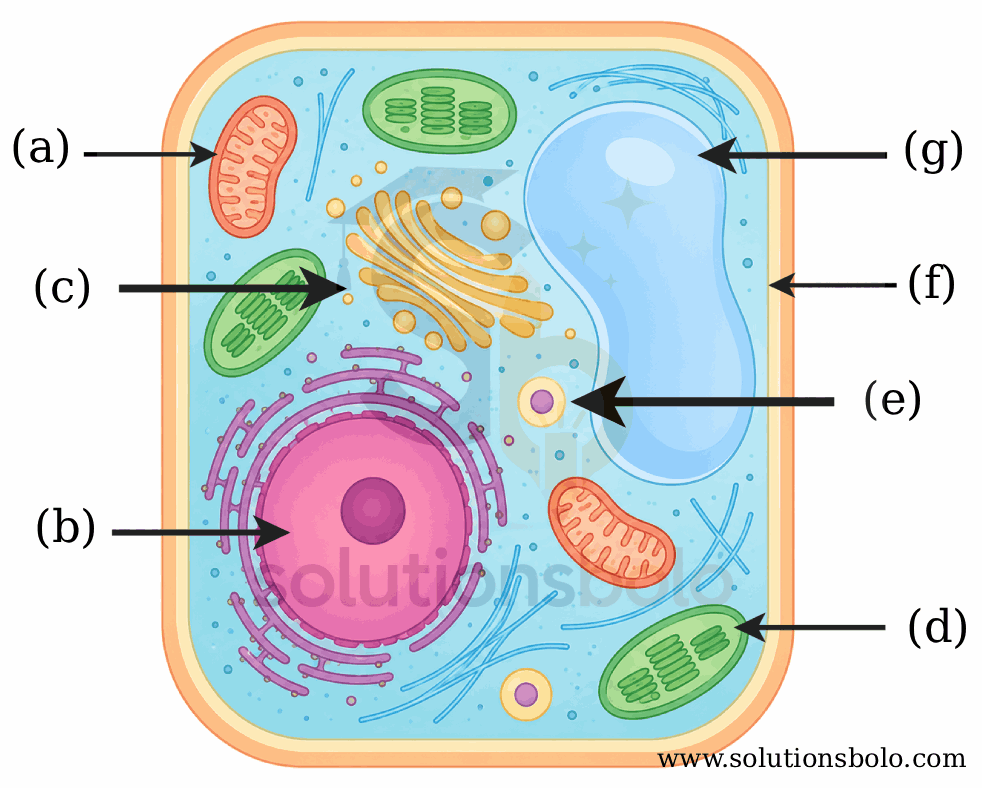
3. Look at the diagram of a cell in Fig. 2.20. Identify the parts labelled from (a) to (g) and correctly match them with their functions given below:
Answer:
| Function | Part |
| (i) Controlling all the activities of a cell. | (b) Nucleus |
| (ii) Site of cellular respiration. | (a) Mitochondria |
| (iii) Storage organelle that also provides rigidity to the cell. | (g) Vacuole |
| (iv) Separates the cell contents from surroundings. | (f) Cell membrane |
| (v) Provides structural rigidity to the cell. | (e) Cell wall |
| (vi) Packs and stores materials received from ER. | (c) Golgi apparatus |
| (vii) Helps in manufacturing food. | (d) Chloroplast |
Explanation: Each part of a plant cell performs a unique and essential function to maintain the cell’s life and structure:
(b) Nucleus: It acts as the brain or control center of the cell because it regulates all cellular activities, growth, and reproduction by holding the cell’s genetic material (DNA).
(a) Mitochondria: Known as the ‘powerhouse of the cell’, it is the specific site where cellular respiration occurs to break down nutrients and generate energy in the form of ATP.
(g) Vacuole: It is a large storage organelle in plant cells that stores water, waste, and nutrients while maintaining turgor pressure to keep the cell rigid and upright.
(f) Cell membrane: Also called the plasma membrane, it acts as a selective barrier that encloses the cell cytoplasm and separates the internal cell contents from the external environment.
(e) Cell wall: Located outside the cell membrane in plants, this tough, outer layer made of cellulose provides mechanical strength, protection, and structural rigidity to the cell.
(c) Golgi apparatus: This organelle functions as the packaging and dispatching unit that receives lipids and proteins from the Endoplasmic Reticulum (ER), modifies them, and packs them into vesicles.
(d) Chloroplast: These are specialized plastids containing chlorophyll that trap sunlight to carry out photosynthesis, helping the plant cell manufacture its own food (glucose).
4. Which of the following option(s) of the pairs of cell organelles are correctly placed under the given categories?
| Option | Present in plant cells | Absents in the animal cells |
| (i) | Leucoplast | Cell wall |
| (ii) | Mitochondria | Ribosome |
| (iii) | Cell Wall | Golgi apparatus |
| (iv) | Lysosome | Endoplasmic Reticulum |
Answer: Option (i) is correct because leucoplasts and cell wall are present in plant cells but absent in animal cells.
Explanation: Option (i) is the correct answer. Leucoplasts are colourless plastids found in plant cells for storing starch, oils and proteins but they are absent in animal cells. Similarly, the cell wall is a rigid protective covering present only in plant cells and absent in animal cells. The other options are incorrect because mitochondria, ribosomes, Golgi apparatus, endoplasmic reticulum and lysosomes are generally present in both plant and animal cells, though their abundance and functions may slightly differ.
| Plant Cell | Animal Cell | Present in Both Cells |
| Leucoplast (Present) | Leucoplast (NOT Present) | Mitochondria |
| Cell wall (Present) | Cell wall (NOT Present) | Ribosomes |
| Golgi apparatus | ||
| Endoplasmic reticulum | ||
| Lysosomes |
5. Two students, Renu and Rohit, were having a discussion on the plastids. Renu emphasised that all parts of the plants, even roots, contain plastids. However, Rohit did not agree with the statement and told her that plastids are absent in plant roots since the roots are underground and do not need to perform photosynthesis. Who is correct? Justify your answer.
Answer: Renu is correct because roots contain colourless plastids called leucoplasts, although they lack chloroplasts needed for photosynthesis activities.
Explanation: Renu is correct because plastids are present in almost all plant parts, including roots. However, roots usually do not contain chloroplasts because they remain underground and do not perform photosynthesis. Instead, root cells usually have colourless plastids known as leucoplasts that store food materials such as starch, oils and proteins. Rohit misunderstood that only chloroplasts are plastids. In reality, plastids include chloroplasts, chromoplasts and leucoplasts. Therefore, even underground roots possess plastids, though their functions differ from those in green leaves.
6. Mitochondria and chloroplasts are two important organelles in a plant cell. Discuss how these two organelles are structurally and functionally similar to each other and different from each other.
Answer: Both mitochondria and chloroplasts contain DNA, ribosomes and double membranes. Mitochondria release energy through respiration, whereas chloroplasts prepare food through photosynthesis. Chloroplasts contain chlorophyll pigments, while mitochondria lack pigments and mainly produce ATP for cellular activities.
Explanation:
Structural and Functional Similarities
| Feature | Mitochondria | Chloroplasts |
| Membrane Structure | Enclosed by a double-membrane system (outer and inner membranes). | Enclosed by a double-membrane system (outer and inner membranes). |
| Genetic Material | Contains its own independent DNA. | Contains its own independent DNA. |
| Protein Synthesis | Contains its own ribosomes, allowing it to make some of its own proteins. | Contains its own ribosomes, allowing it to make some of its own proteins. |
| Evolutionary History | Shared evolutionary history with single-celled bacterial organisms. | Shared evolutionary history with single-celled bacterial organisms. |
| Surface Area Enhancement | Inner membrane is folded into finger-like projections (cristae) to increase surface area for reactions. | Contains stacks of disc-shaped membrane structures to maximize light absorption. |
Structural and Functional Differences
| Feature | Mitochondria | Chloroplasts |
| Primary Function | Energy Release: Breaks down glucose to release energy via cellular respiration. | Food Synthesis: Manufactures sugars from sunlight via photosynthesis. |
| Occurrence | Found in both plant and animal cells. | Found only in plant cells (and some algae). |
| Pigments | Completely lacks pigments. | Contains the green pigment chlorophyll to absorb sunlight. |
| Internal Structure | The inner chamber is filled with matrix, and the inner membrane forms folds called cristae. | The inner chamber is filled with fluid called stroma and contains disc-shaped membrane structures. |
| Energy Product | Generates and stores chemical energy in the form of ATP (energy currency). | Converts solar energy into chemical energy, storing it as sugars/starch granules. |
7. Which of the following pairs of cell organelles contains DNA? (i) Chloroplasts, Ribosomes (ii) Mitochondria, Nucleus (iii) Golgi bodies, Ribosomes (iv) Nucleus, Lysosome
Answer: The correct pair is (ii) Mitochondria and Nucleus, as both contain their own genetic material (DNA) to control cellular activities.
Explanation: The correct option is (ii) Mitochondria and nucleus. The nucleus contains most of the genetic material controlling cell activities and inheritance. Mitochondria also contain small amounts of their own DNA and ribosomes, allowing them to produce some proteins independently. Ribosomes, Golgi bodies and lysosomes do not contain DNA. Hence, the nucleus and mitochondria are considered the cell organelles that contain DNA.
8. A researcher carried out an experiment in which she took two carrots of similar size. She placed one carrot in plain water and the other carrot in concentrated salt solution (Fig. 2.21). After 24 hours she recorded her observations.
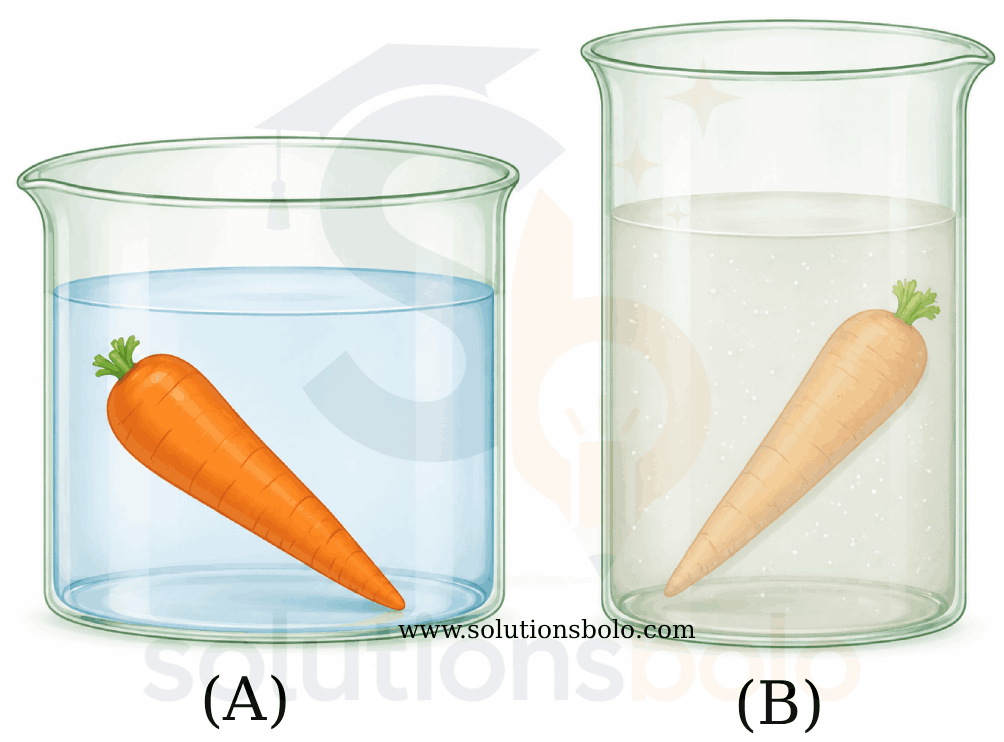
(i) What hypothesis does she want to test through this experiment? (ii) What would you suggest for the improvement of this experiment? (iii) Why does the carrot in plain water stay stiff and crunchy but the carrot in concentrated salt solution become rubbery and limp?
Answer: (i) The experiment tests osmosis in carrot cells. (ii) Equal-sized carrots and repeated trials improve accuracy. (iii) Water enters carrot cells in plain water, making them stiff, while water leaves cells in concentrated salt solution, making them rubbery and limp.
Explanation: (i) The researcher wants to test that water moves across cell membranes by osmosis, causing plant cells to gain water in dilute solution and lose water in concentrated salt solution.
(ii) The experiment can improve by using carrots of equal size and weight, measuring their weight before and after observation, repeating the experiment several times and maintaining the same temperature and observation period for accurate and reliable results throughout the investigation process.
(iii) In plain water, water enters carrot cells through osmosis, making cells turgid and keeping the carrot stiff and crunchy. In concentrated salt solution, water leaves the cells through osmosis, causing loss of turgidity and making the carrot soft, rubbery and limp gradually.
9. Indicate the presence or absence of following structures in bacterial and animal cells:
| Structure in a cell | Bacterial cell | Animal cell |
| Chromosome | ||
| Nucleus | ||
| Mitochondria | ||
| Golgi complex | ||
| Chromoplasts |
Answer:
| Structure in a cell | Bacterial cell | Animal cell |
| Chromosome | Present | Present |
| Nucleus | Absent | Present |
| Mitochondria | Absent | Present |
| Golgi complex | Absent | Present |
| Chromoplasts | Absent | Absent |
Explanation: Bacterial cells are prokaryotic cells, so they lack a true nucleus and membrane-bound organelles like mitochondria and Golgi complex. However, they contain chromosomes carrying genetic material. Animal cells are eukaryotic cells containing a nucleus, mitochondria and Golgi complex for various cellular activities. Chromoplasts are coloured plastids found mainly in plant cells, especially fruits and flowers, so they are absent in both bacterial and animal cells completely.
10. Carry out the following experiment: Take four peeled potato halves and scoop each one out to make potato cups. One of these potato cups should be made from a boiled potato. Place each of the potato cups in a beaker containing water (Fig. 2.22). Now, set up the experiment as follows:
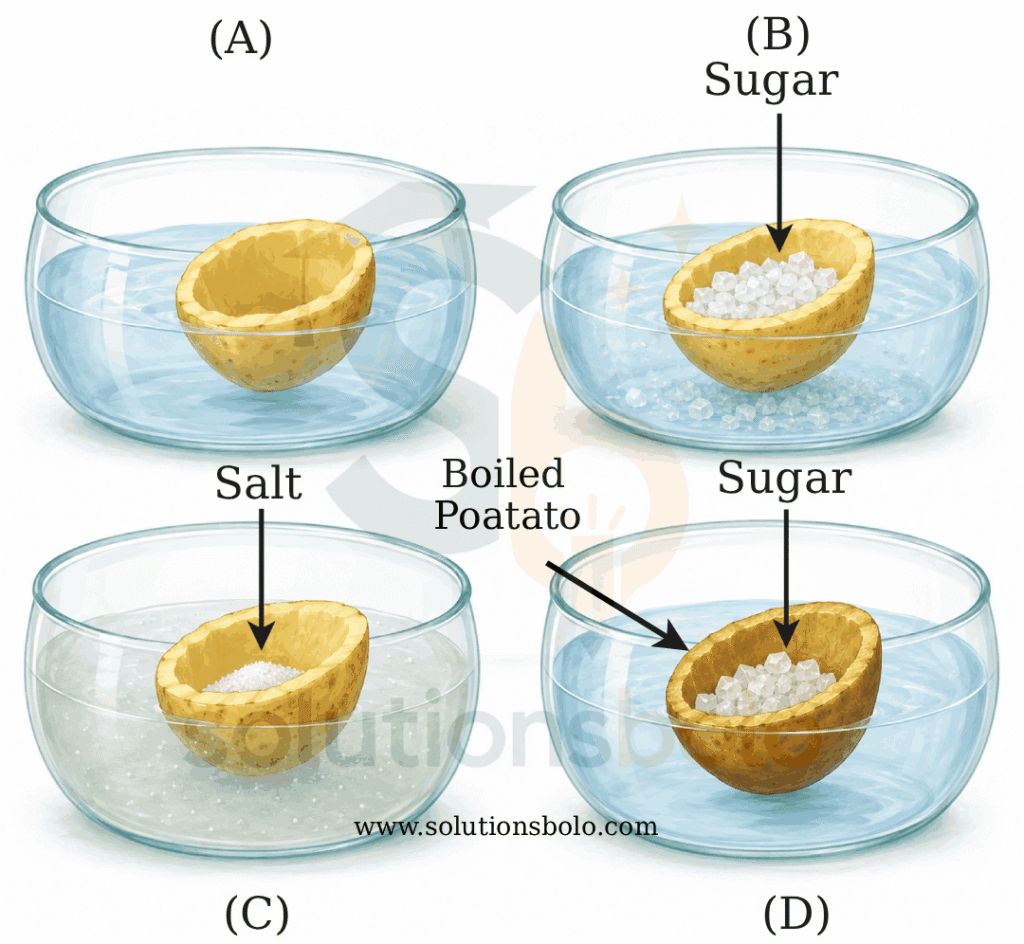
(a) Keep Cup A empty.
(b) Add one teaspoon sugar in Cup B.
(c) Add one teaspoon salt in Cup C.
(d) Add one teaspoon sugar in the boiled potato in Cup D.
Observe the four potato cups at least two hours and answer the following questions:
(i) Explain why water gathers in the hollowed portion of Cup B and Cup C.
(ii) Why is Cup A necessary for this experiment?
(iii) Explain why water does not gather in the hollowed portions of Cups A and D.
Answer: (i) Water enters potato cells through osmosis because sugar and salt solutions create concentrated conditions inside the hollowed potato cups.
(ii) Cup A acts as a control setup, proving that water collection occurs only due to osmotic concentration differences experimentally.
(iii) Cup A lacks concentration difference, while boiling destroys selectively permeable membranes in Cup D, preventing osmosis and water collection.
Explanation: (i) Sugar in Cup B and salt in Cup C create hypertonic solutions inside the potato cups. Due to osmosis, water moves from the surrounding dilute solution into the concentrated solution through the selectively permeable membranes of potato cells. As water continuously enters the hollow portions, it gathers there. This demonstrates osmotic movement of water from a region of higher water concentration to lower concentration.
(ii) Cup A serves as the control experiment because it contains no sugar or salt. It helps scientists compare the observations of other cups and confirms that water gathering occurs due to osmotic movement caused by concentrated solutions. Without Cup A, it would be difficult to conclude whether water accumulation was caused by the potato structure or the dissolved solutes.
(iii) In Cup A, water does not collect because there is no concentration difference to cause osmosis. In Cup D, boiling damages the selectively permeable cell membranes of potato tissues. Since osmosis requires living or intact selectively permeable membranes, water movement into the hollow portion does not occur. Therefore, no water gathers in Cups A and D during the experiment.
11. Identify the pair that incorrectly matches the cell organelle with its function. (i) Ribosome — Protein synthesis (ii) SER — Lipid and cellulose synthesis (iii) Lysosome — Digestion of foreign agents
Answer: Option (ii) is incorrect because SER helps in lipid synthesis but cellulose synthesis mainly occurs at the cell membrane.
Explanation: The incorrect option is (ii) SER — Lipid and cellulose synthesis. Smooth endoplasmic reticulum mainly synthesises lipids and helps in detoxification and transport. However, cellulose synthesis does not occur in SER. Cellulose is produced by enzyme complexes associated with the plasma membrane during plant cell wall formation. Therefore, the pairing mentioning cellulose synthesis with SER is scientifically incorrect.
12. What outcome do you expect, if all the mitochondria are removed from a eukaryotic cell?
Answer: Without mitochondria, the eukaryotic cell cannot produce sufficient ATP energy, causing metabolism failure, loss of cellular activities and death.
Explanation: Mitochondria are called the powerhouse of the cell because they produce ATP (Adenosine Triphosphate) through cellular respiration. If all mitochondria are removed from a eukaryotic cell, energy production will drastically decrease. Processes like active transport, protein synthesis and cell repair will fail. Anaerobic respiration in cytoplasm may temporarily produce little energy but eventually metabolism will stop and the cell will die.
13. Which phenomenon inhibits the formation of tumors in the human body? Can plants also develop tumors? Explain.
Answer: Contact inhibition prevents uncontrolled cell division and inhibits tumor formation in humans. Plants can also develop tumors, such as crown gall disease caused by bacteria.
Explanation: In humans, contact inhibition prevents excessive cell division and helps inhibit tumor formation. Normal cells stop dividing when they touch neighbouring cells. Plants can also develop tumors, such as crown gall disease caused by Agrobacterium bacteria. However, plant tumors generally remain localized because rigid cell walls prevent cells from spreading easily to distant body regions like animal cancer cells.
14. The cell membrane of a cell is made up of proteins and lipids. Which cell organelles help in the synthesis of cell membrane? Write the path of these compounds from their site of synthesis to the cell membrane and show this through a labelled diagram.
Answer: Ribosomes on RER synthesise proteins, while SER synthesises lipids for the cell membrane. These materials move through ER to the Golgi apparatus for modification and packaging, then travel in vesicles and finally fuse with the cell membrane.
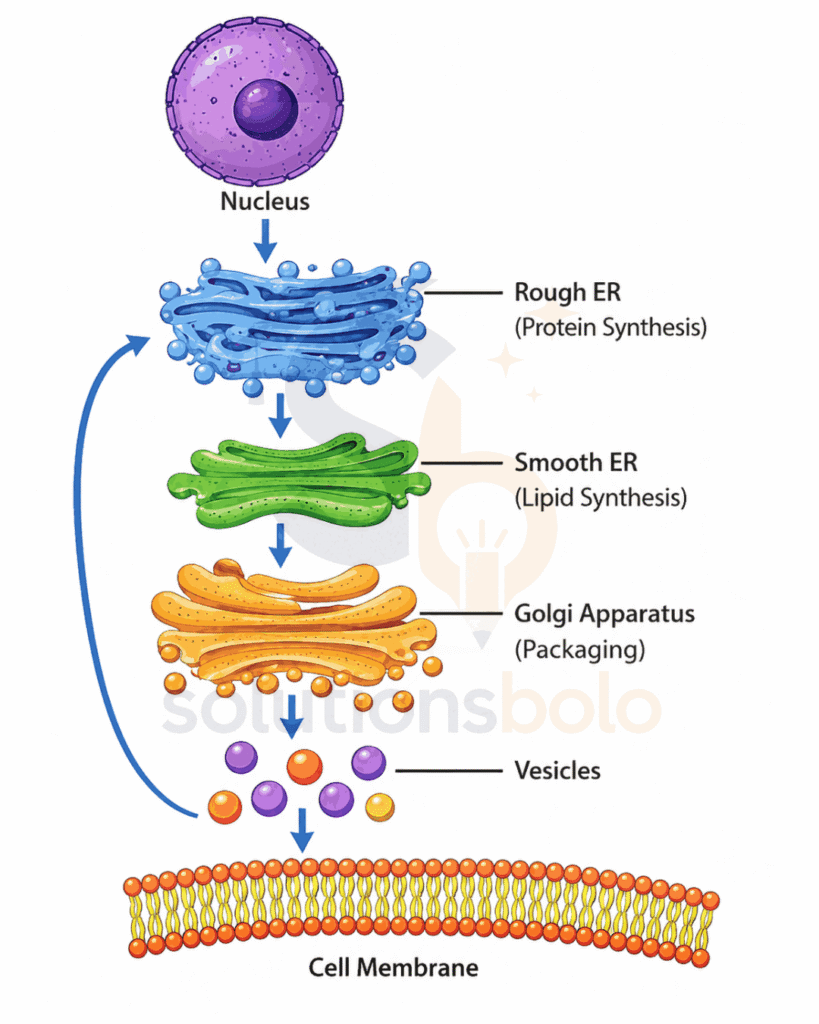
Explanation:
1. Ribosomes present on the Rough Endoplasmic Reticulum (RER) synthesize proteins needed for the cell membrane.
2. Smooth Endoplasmic Reticulum (SER) synthesizes lipids.
3. These proteins and lipids move through the Endoplasmic Reticulum (ER) to the Golgi apparatus for modification and packaging.
4. The Golgi apparatus packs them into vesicles.
5. Vesicles carry these substances to the cell membrane, where they become part of the membrane.
Pathway:
Protein → RER → Golgi apparatus → Vesicles → Cell membrane
Lipid → SER → Golgi apparatus → Vesicles → Cell membrane
15. What would happen if gametes are formed by mitotic divisions?
Answer: If gametes are formed by mitosis, they will contain the full chromosome number instead of half. Fertilisation would then double the chromosome number in every generation, causing abnormal development and disturbance in chromosome balance.
Explanation: Normally, gametes such as sperm and egg are formed by meiosis, which reduces the chromosome number to half. If gametes were formed by mitosis instead, several serious problems would occur:
• No reduction in chromosome number: Gametes would contain the full chromosome number instead of half.
• Chromosome doubling after fertilisation: Fusion of two such gametes would produce a zygote with double chromosome number.
• Increase in every generation: Chromosome number would keep doubling generation after generation.
• No genetic variation: Mitosis produces identical cells, so offspring diversity would reduce greatly.
• Survival problems: Excess chromosomes would disturb normal body functions and may threaten species survival.
16. A farmer, Deepa, was very happy with the harvest of amla (Indian Gooseberry) and lemons on her farm. However, she could sell only one fourth of the produce in the local market. Recognising that a significant amount of produce may be lost post-harvest, she employed a traditional yet scientifically sound method to extend the shelf life of amla and lemons. She turned perishable produce into profitable products, such as pickles and sharbat. She used the excess produce to prepare pickles, murabbas and sharbat by adding appropriate amounts of salt, sugar or jaggery to small pieces of fruit and their juices. These were then stored in small glass bottles for sale, helping her prevent the wastage of post-harvest produce. This shift from farming to agro-processing would strengthen food security and boost the local economy, creating a sustainable model that cuts waste while increasing her income. Based on the above passage answer the following questions:
(i) Which scientific concept has the farmer applied in the preservation of the farm produce?
(ii) How does the addition of high concentrations of salt and sugar create an environment that prevents the growth of spoilage-causing bacteria and fungi?
(iii) Suggest a healthy recipe of this kind for food preservation.
(iv) What are the scientific values addressed in this case?
Answer: (i) Osmosis and food preservation.
(ii) Salt and sugar remove water from microbes, preventing their growth and reproduction.
(iii) Lemon pickle or amla murabba.
(iv) Scientific thinking, resource conservation, food security, waste reduction, entrepreneurship, sustainability and economic development are the values demonstrated in this case.
Explanation: (i) The farmer applied the scientific concepts of osmosis and food preservation techniques. High concentrations of salt and sugar help preserve food by preventing microbial growth through osmotic action.
(ii) Salt and sugar draw water out of bacteria and fungi through osmosis, causing dehydration and stopping their growth and reproduction.
(iii) Healthy Preserved Recipe (Amla Murabba): Wash fresh amla properly and boil until slightly soft. Prepare jaggery syrup and cook the amla slowly until thickened. Add cardamom for flavour if desired. Store the prepared murabba in clean, dry glass jars. High sugar concentration and hygienic storage help prevent microbial growth and naturally increase shelf life.
(iv) Scientific Values Involved: Prevention of food wastage, sustainable development, scientific thinking, food security, resource management, self-reliance, hygiene and improvement of the local economy through agro-processing activities.
Scientists Mentioned in the Chapter:
All the scientists, their year and their discovery and contribution based on Chapter 2 Cell: The Building Block of Life of the Class 9 Science textbook:
1. Robert Hooke (English Polymath, Physicist and Mathematician)
Year: 1665
Contribution & Discovery: Using a self-designed primitive microscope (स्व-निर्मित प्राथमिक सूक्ष्मदर्शी), he examined a thin slice of cork and observed tiny box-like compartments (छोटे-छोटे बक्से जैसे कक्ष देखे), which he named ‘cells’ (meaning little rooms).
2. Matthias Jakob Schleiden (German Botanist)
Year: 1838
Contribution & Discovery: A German botanist who thoroughly examined various plant tissues and concluded that all plants are composed of different types of cells, laying the foundation of the Cell Theory.
3. Theodor Schwann (German physician and physiologist)
Year: 1839
Contribution & Discovery: A German physiologist who discovered that animal tissues are also composed of cells (जंतु ऊतक भी कोशिकाओं से बने होते हैं). He joined Schleiden in formulating the Cell Theory (कोशिका सिद्धांत का प्रतिपादन).
4. Rudolf Virchow (German Physician, Anthropologist and Pathologist)
Year: 1855
Contribution & Discovery: He expanded the Cell Theory by explaining that new cells cannot arise spontaneously (नई कोशिकाएँ स्वतः उत्पन्न नहीं हो सकतीं); they only develop from the division of pre-existing cells (पहले से मौजूद कोशिकाएँ) called “Omnis cellula e cellula”.
5. Camillo Golgi (Italian Physician and Anatomist)
Year: 1898
Contribution & Discovery: An Italian physician who discovered a network-like structure in nerve cells using a special staining technique. This organelle was later named the “Golgi apparatus.”
6. J. Craig Venter and his team (American Biotechnologist and Geneticist)
Year: 2010
Contribution & Discovery: This scientific team successfully created the world’s first synthetic cell by decoding a bacterium’s DNA genome (एक बैक्टीरिया के DNA जीनोम को डिकोड करके दुनिया की पहली कृत्रिम कोशिका), chemically synthesizing it in a lab and transplanting it into a recipient cell.
7. Arun Kumar Sharma (Indian Botanist and Cytogeneticist)
Year: 20th Century
Contribution & Discovery: A renowned Indian botanist known for his pioneering research on chromosome structure. He developed innovative staining techniques to study plant chromosomes, earning him the prestigious Padma Bhushan.
8. Gottlieb Haberlandt (Austrian Botanist)
Year: 1902
Contribution & Discovery: Regarded as the father of ‘Plant Tissue Culture’. He first proposed the concept of growing isolated plant cells in an artificial nutrient medium.
Thinking-Based / Competency-Based Questions:
You are not studying science merely to pass an exam. You are learning how scientists think.
1. If the cell membrane suddenly loses its selectively permeable nature, what problems would the cell face? Explain your reasoning.
Think Like a Scientist:
If the cell membrane loses selective permeability, harmful substances may freely enter while essential materials may leak outside. Water balance, nutrient transport, waste removal and internal conditions would become uncontrolled. Cellular activities would fail gradually, leading to organelle damage, metabolic imbalance and finally complete cell death.
2. Why do plant cells need a rigid cell wall while animal cells survive without it? How does this relate to their lifestyle?
Think Like a Scientist:
Plant cells remain fixed in one place and face wind, pressure and environmental stress. Therefore, they require a rigid cell wall for protection, support and shape. Animal cells move actively and need flexibility for movement. Hence, animals survive without a rigid cell wall around their cells.
3. Suppose mitochondria stop functioning inside a muscle cell during running. Predict what may happen to the body and explain scientifically.
Think Like a Scientist:
Mitochondria produce ATP energy required for muscle contraction during running. If they stop functioning, muscles will not receive sufficient energy. The person may experience weakness, fatigue, muscle pain and inability to continue running. Long-term mitochondrial failure can seriously affect body organs and cellular metabolism processes.
4. A raisin swells in water but shrinks in concentrated sugar solution. Which cellular process is responsible for this change and why?
Think Like a Scientist:
A raisin swells in water because water enters its cells through osmosis, making them turgid. In concentrated sugar solution, water moves out of raisin cells through osmosis due to lower external water potential. This loss of water causes the raisin to shrink and become wrinkled gradually.
5. If meiosis did not reduce chromosome number in gametes, what effects would appear in future generations of organisms?
Think Like a Scientist:
If meiosis failed to reduce chromosome number, gametes would contain full chromosomes. After fertilisation, chromosome number would double in every generation, causing genetic imbalance and abnormal development. Organisms may lose stability, proper functioning and survival ability. Genetic diversity would also reduce significantly in future generations.
6. How would a plant be affected if chloroplasts suddenly disappeared from all its cells? Predict both immediate and long-term consequences.
Think Like a Scientist:
Without chloroplasts, plants could not perform photosynthesis and would fail to prepare food using sunlight. Energy production and glucose formation would stop. Leaves would lose green colour, plant growth would decline and eventually the entire plant would die because it could not produce its own nourishment anymore.
7. Cancer cells divide continuously without control. How is their behaviour different from normal body cells and why is this dangerous?
Think Like a Scientist:
Normal cells divide in a controlled manner and stop when needed but cancer cells continue dividing uncontrollably. They form tumours that damage nearby tissues and disturb organ functions. Some cancer cells spread to other body parts through blood, making treatment difficult and threatening the person’s survival seriously.
8. Can two different types of cells, such as a plant cell and an animal cell, combine together to form a single new cell? Explain scientifically.
Think Like a Scientist:
Plant cells and animal cells normally cannot combine naturally into one stable cell because their structures, functions and genetic systems differ greatly. Plant cells contain cell walls and plastids, while animal cells lack them. Scientists may experimentally fuse certain cells in laboratories but such fused cells usually cannot survive normally.
Very Short Answer Type Questions:
1. How to Study Cells?
Answer: Cells are studied using microscopes, special stains, slides and modern imaging techniques to observe their structure organelles and activities clearly.
2. Why do eukaryotic cells need these organelles?
Answer: Eukaryotic cells need organelles to perform specialised functions like respiration, protein synthesis, transport, storage and waste removal efficiently inside cells.
3. Do you know any other cells without nucleus?
Answer: Yes, mature human red blood cells and prokaryotic cells like bacteria lack a true nucleus inside their cellular structure completely.
4. How does the cell prevent these wastes from accumulating inside it?
Answer: Cells remove wastes through lysosomes, vacuoles, exocytosis and diffusion, preventing harmful substances from accumulating and damaging cellular activities internally.
5. Are there any other plastids in plant cells that contain any pigments other than the green pigments?
Answer: Yes, chromoplasts contain red, yellow and orange pigments that provide colour to flowers, fruits and some vegetables in plants.
6. How do flowers, fruits and vegetables acquire varied colours?
Answer: Flowers, fruits and vegetables acquire varied colours due to pigments present in chromoplasts, such as carotene and xanthophyll pigments naturally.
7. How do Normal Cells Grow and Divide?
Answer: Normal cells grow by increasing in size and divide through controlled cell division processes like mitosis for growth and repair.
8. Do cells grow and reproduce forever?
Answer: No, normal cells cannot grow and reproduce forever because ageing, genetic limits and programmed cell death eventually stop cellular division.
9. Can you identify which stage comes first during cell division?
Answer: Interphase comes first during cell division, where the cell grows, duplicates DNA and prepares itself for proper cell division activities.
10. What happens if meiosis and mitosis do not happen properly?
Answer: Improper meiosis or mitosis may cause abnormal chromosome numbers, genetic disorders, uncontrolled growth, defective cells or failure of body functions.
11. What do we call the study of cells?
Answer: The study of cells is called Cytology. It is a branch of biology that deals with the structure, function and behaviour of cells.
12. Are any cells formed after our birth?
Answer: Yes, many new cells are formed after birth through cell division for growth, repair, replacement of damaged cells and healing.
Short Answer Type Questions:
1. Cell is The Building Block of Life. Explain.
Answer: Every living organism is composed of cells. They form the basic structural foundation and independently perform all vital life processes like respiration, nutrition and excretion necessary to sustain an organism.
2. All living organisms are made up of cells. Explain.
Answer: From microscopic, single-celled bacteria to massive multicellular plants and animals, every living entity originates from and is built of cells, establishing the cell as the universal unit of biological structure.
3. Do you observe the cells of the onion root tip? Are they similar in structure? Do you find any structural differences in these cells? If yes, why is it so?
Answer: Yes, onion root tip cells are observed. While they look generally similar, structural differences exist because cells are caught in different stages of active cell division (mitosis) to facilitate root growth.
4. What do we call the study of cancer? How do cancer cells grow and spread?
Answer: The study of cancer is called oncology. Cancer cells grow through rapid, uncontrolled cell division because they lack normal regulatory checks, spreading to other body parts by invading healthy tissues.
5. How do cells monitor their growth to maintain a balance?
Answer: Cells monitor their growth using specific molecular checkpoints during the cell cycle. These checkpoints evaluate internal conditions and trigger programmed cell death (apoptosis) if abnormal or damaged cells are detected.